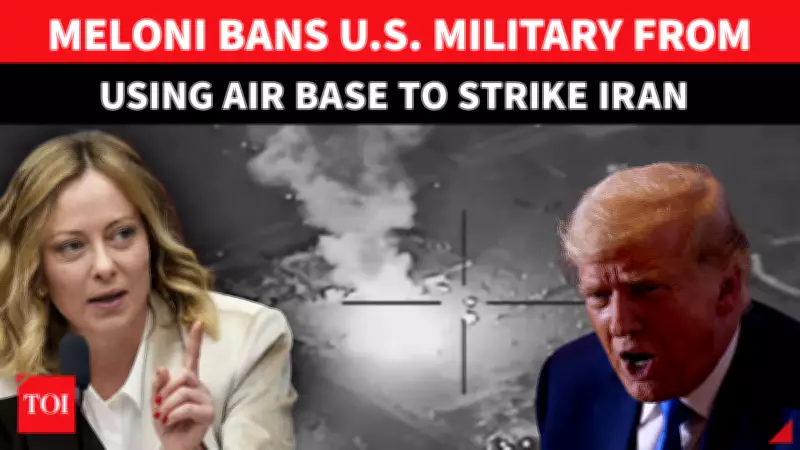
Italy and Spain Refuse US Military Access, Exposing NATO Rifts Over Iran Conflict
In a significant development that highlights growing divisions within the North Atlantic Treaty Organization (NATO), Italy and Spain have taken a firm stance against supporting United States military operations related to the ongoing conflict with Iran. This move has sparked concerns about alliance cohesion and operational challenges for American forces.
Denial of Access to Key Bases and Airspace
Italy has explicitly denied the United States access to its Sigonella air base, a critical NATO facility located in Sicily. The Italian government cited legal constraints and a lack of prior consultation as the primary reasons for this decision. Similarly, Spain has blocked the use of its airspace and military bases for any offensive missions by the US, further complicating American military logistics in the region.
These refusals force American aircraft to take longer and more circuitous routes to reach operational areas, potentially delaying missions and increasing risks. The strategic implications are significant, as efficient access to bases in Southern Europe is crucial for rapid deployment and support in conflicts like the one involving Iran.

US Response and Diplomatic Tensions
US Secretary of State Marco Rubio expressed strong disappointment over the actions of Italy and Spain. In a statement, he described the move as "very disappointing" and warned that it could have lasting impacts on future bilateral relations. This diplomatic friction underscores the broader tensions within NATO, where member states are increasingly asserting their sovereignty and legal frameworks over alliance obligations.
The situation is exacerbated by rising tensions in the Strait of Hormuz, a vital chokepoint for global energy routes. With threats to oil shipments and regional stability, the cracks within the Western alliance are becoming more visible, raising questions about NATO's ability to present a united front in complex geopolitical scenarios.
Broader Implications for NATO and Global Security
This incident highlights several key issues:
- Legal and Consultative Challenges: The lack of prior consultation points to communication gaps within NATO, potentially undermining coordinated efforts.
- Operational Hindrances: Longer flight routes not only delay missions but also increase fuel costs and operational vulnerabilities for US forces.
- Alliance Cohesion: Such refusals may signal a shift in how some NATO members view their commitments, especially in conflicts perceived as driven by US interests.
As the Iran conflict continues to escalate, with recent reports of strikes and espionage activities, the decisions by Italy and Spain could set a precedent for other nations to follow. This development may force a reevaluation of NATO's operational protocols and diplomatic strategies to maintain unity in the face of emerging threats.
In summary, the blocking of US military access by Italy and Spain represents a notable rift within NATO, driven by legal concerns and diplomatic missteps. It complicates US operations in the Iran conflict and raises broader questions about the future of Western alliance cooperation in an increasingly volatile global landscape.