

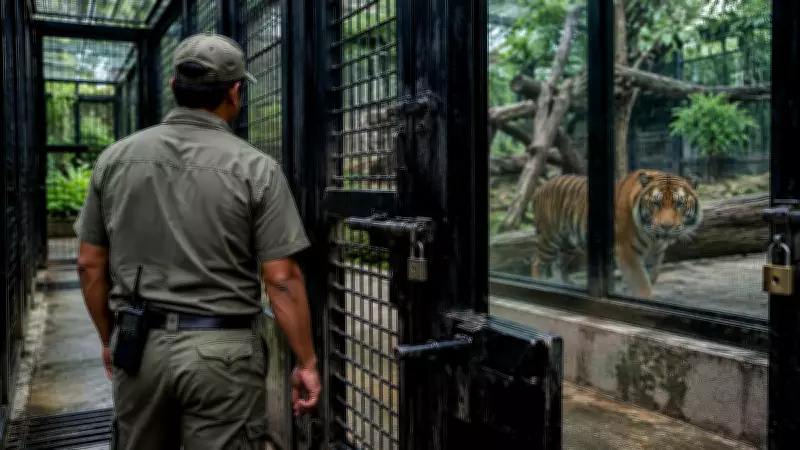
Karnataka High Court Criticizes Zoo Safety Measures After 17 Staff Deaths
The Karnataka High Court on Monday made a strong observation regarding the safety of zoo personnel, stating that no protocol is required to instruct someone not to enter a tiger enclosure. The remark came while hearing a public interest litigation (PIL) filed by an animal rights activist, highlighting 17 incidents of grievous injuries and fatalities among zoo staff in Karnataka.
The petitioner, through counsel, submitted that between 2019 and 2025, at least 17 zoo employees had died or suffered serious injuries while on duty, as reported in media. The incidents included attacks by tigers, elephants, and other wild animals, as well as accidents during handling and maintenance. The petitioner sought a comprehensive safety audit and implementation of standard operating procedures (SOPs) across all zoos in the state.
Court's Observation on Common Sense and Safety
“You don’t need a protocol not to enter a tiger enclosure. That is common sense,” the division bench of Chief Justice N.V. Anjaria and Justice K.V. Aravind remarked. The court, however, acknowledged the seriousness of the issue and directed the Zoo Authority of Karnataka to file a detailed response within four weeks. The bench also asked the authority to explain what measures have been taken to prevent such incidents and whether existing SOPs are being followed.

The court noted that while some accidents may be unavoidable, repeated fatalities indicate systemic lapses. “If 17 people have died, something is fundamentally wrong with the safety culture,” the bench observed, adding that the authority must ensure that staff are adequately trained and provided with protective gear.
Government's Response and Affidavit
Advocate General K. Shashi Kiran Shetty, appearing for the state, informed the court that the Zoo Authority of Karnataka has already initiated a review of safety protocols. He submitted that a committee has been formed to inspect all zoos and submit a report within three months. The court, however, expressed dissatisfaction with the pace of action and directed the authority to file an affidavit detailing the timeline of implementation.
The next hearing is scheduled for August 2026. The court also suggested that the authority consider engaging wildlife safety experts and conducting regular mock drills for emergency situations.






