

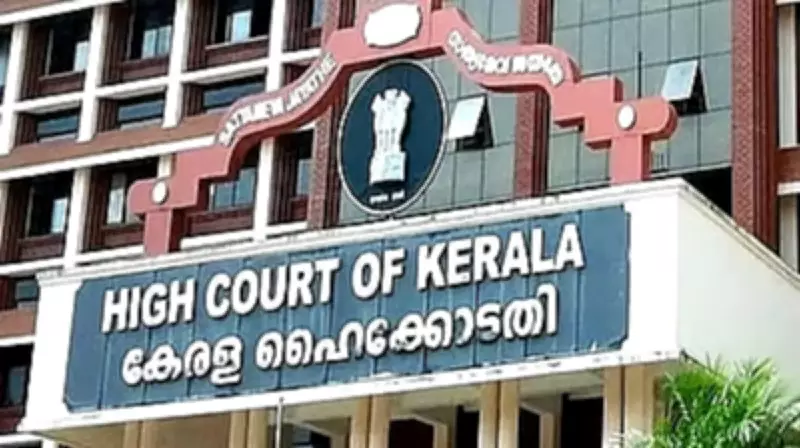
High Court Ruling on Oath Taking
The Kerala High Court has declared that oaths taken in the name of specific deities, 'Mother India', political martyrs, organizations, or individuals are not valid under the law. The court emphasized that only oaths invoking 'God' or a solemn affirmation are permissible as per the statutes.
Details of the Judgment
Justice P. Somarajan delivered the judgment, stating that the prescribed forms of oath or affirmation under the Constitution and the Oaths Act, 1969, cannot be expanded to include additional names. The court was hearing a petition challenging the validity of an oath taken by a public official who swore in the name of 'Sree Narayana Guru'.
According to the judgment, the oath must be either in the name of 'God' or a solemn affirmation. Any deviation, such as adding names of specific deities, 'Mother India', or political figures, renders the oath invalid. The court noted that the intent of the law is to ensure uniformity and secularism in the administration of oaths.

Impact on Public Officials
The ruling applies to all public officials, including members of legislative assemblies, parliament, and the judiciary. Officials who have taken oaths in non-compliant forms may need to retake their oaths. The court clarified that the decision does not affect past oaths unless challenged, but future oaths must adhere to the prescribed format.
Advocate General K. Gopalakrishna Kurup argued that the state government would issue guidelines to ensure compliance. The court also directed that the Registrar General of the High Court circulate the judgment to all subordinate courts and public authorities.
Legal and Constitutional Basis
The judgment references Article 60 of the Constitution, which prescribes the form of oath for the President, and the Third Schedule, which provides the forms for various public officials. The Oaths Act, 1969, also specifies that oaths can be taken in the name of 'God' or by solemn affirmation.
The court observed that allowing variations could lead to religious or political bias and undermine the secular character of the state. The ruling reinforces the principle that public office requires a uniform and neutral form of oath-taking.
Reactions and Next Steps
Legal experts have praised the judgment for upholding constitutional values. Some political parties have expressed concern that the ruling may affect the oaths of members who invoked local deities or cultural symbols. However, the court has made it clear that the law must be strictly followed.
The state government is expected to issue a circular reminding all public officials of the correct procedure for taking oaths. The judgment is likely to be cited in similar cases across other states.






