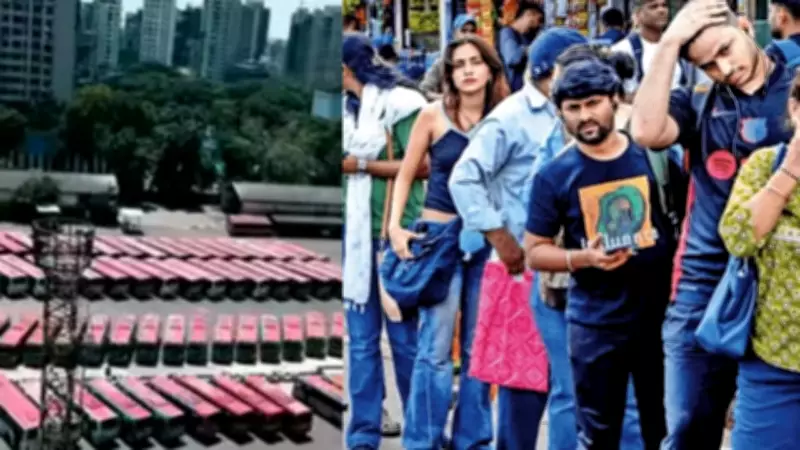
Mumbai's bus services remained severely disrupted on Sunday as the strike by employees of the Brihanmumbai Electric Supply and Transport (BEST) undertaking entered its third day. Despite the Maharashtra government invoking the Maharashtra Essential Services Maintenance Act (MESMA) and an industrial court's interim order restraining employees from striking, the agitation continued.
BEST Arranges Buses for NEET-UG Re-examination
The BEST undertaking arranged over 100 buses to assist students appearing for the National Eligibility-cum-Entrance Test (Undergraduate) (NEET-UG) re-examination in the city on Sunday, according to a PTI report. This measure aimed to mitigate the impact of the strike on students.
Strike Paralyses Public Transport
The strike, called by the BEST Sanyukt Kamgar Kruti Samiti, has nearly paralyzed the civic-run bus transport system since Friday. Commuters have been forced to rely on local trains, Metro services, taxis, and autorickshaws for daily travel. On Friday, the first day of the strike, only 48 buses were operational, while several others were reportedly forced to return to depots following incidents of obstruction and stone-pelting.

On Saturday, just four buses were operating during the first half of the day, leaving commuters dependent on alternative transport. Attendance among drivers, conductors, and other operational staff remained low. BEST operates a fleet of 2,766 buses and ferries about 25 lakh passengers daily, making it Mumbai's second-largest public transport provider after the suburban railway network.
Failed Talks and Union Demands
Maharashtra transport minister Pratap Sarnaik held discussions with union leaders and senior officials from the Urban Transport Department and BEST on Friday, but the talks failed to yield any resolution. In a statement issued on Saturday evening, the unions spearheading the protest said they were open to talks with the government at any time and urged the state leadership to take an early decision on their long-pending demands.
Union leaders reiterated that the strike would continue until the government provides a clear commitment on their demands. These include the merger of BEST's budget with that of the Brihanmumbai Municipal Corporation (BMC), implementation of the Seventh Pay Commission recommendations, settlement of dues of retired employees, an end to contractual arrangements in transport and electricity services, and absorption of wet-lease bus workers into BEST.
Impact on Commuters and Alternative Transport
The strike has resulted in a surge in Metro ridership and increased pressure on the suburban railway network. Several office-goers opted to work from home. Commuters also reported longer waits for taxis and autorickshaws and higher travel costs due to the suspension of bus services. The disruption has highlighted the dependence on BEST buses for daily commuting in Mumbai.
The situation remains tense as the strike continues, with no immediate resolution in sight. The government's invocation of MESMA has not deterred the striking employees, and the industrial court's interim order has been ignored. The unions have expressed willingness to negotiate but insist on a clear commitment from the government on their demands.