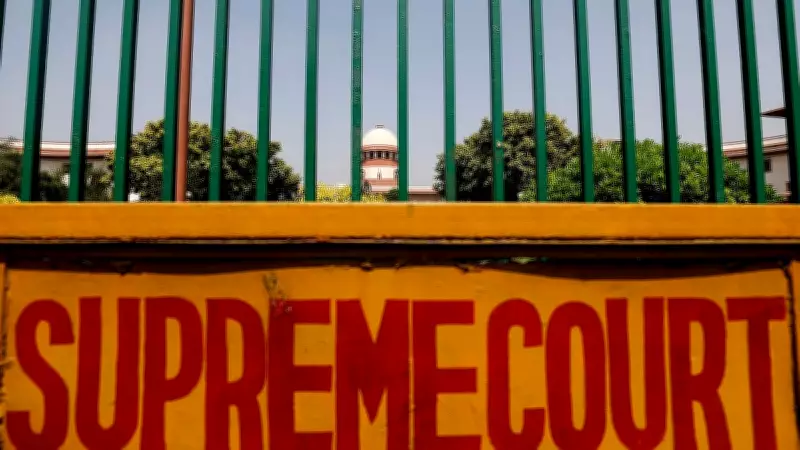
The Supreme Court of India has clarified that the non-supply of charge sheet copies to an accused does not entitle them to default bail. The court emphasized that the right to default bail under Section 167(2) of the Code of Criminal Procedure (CrPC) arises only when the prosecution fails to file the charge sheet itself within the stipulated time period.
Key Ruling
A bench comprising Justices A.B. Singh and Uday Umesh Lalit delivered the judgment on July 1, 2026. The court stated that the failure to furnish copies of the charge sheet and related documents to the accused, even if it causes prejudice, cannot be equated with the non-filing of the charge sheet. The right to default bail is a statutory right that accrues solely upon the expiry of the prescribed period without the charge sheet being filed.
Case Background
The ruling came in an appeal filed by the State of Maharashtra against a Bombay High Court order that had granted default bail to an accused on the ground that the prosecution had not supplied copies of the charge sheet within the statutory period. The high court had held that the non-supply of documents amounted to a violation of the accused's right to a fair trial and therefore the accused was entitled to default bail.

The Supreme Court set aside the high court's order, noting that the CrPC does not provide for default bail merely because the prosecution has not provided copies of the charge sheet. The court observed: "The right to default bail is a valuable right, but it is not triggered by the non-supply of documents. It is triggered only by the failure to file the charge sheet within the time limit prescribed under Section 167(2)."
Legal Implications
The judgment settles a contentious issue that had arisen in various high courts across the country. Some high courts had taken the view that the prosecution's failure to supply charge sheet copies within the statutory period should be treated as a failure to complete the investigation, thereby entitling the accused to default bail. However, the Supreme Court has now clarified that the two are distinct: filing the charge sheet is a separate act from supplying copies to the accused.
The court also noted that the accused can still seek other remedies, such as filing an application for bail on merits under Section 439 of the CrPC, if the non-supply of documents causes prejudice. But the remedy of default bail under Section 167(2) is not available in such circumstances.
Impact on Pending Cases
According to legal experts, this ruling will have a significant impact on thousands of pending cases where accused persons have claimed default bail solely on the ground of non-receipt of charge sheet copies. The Supreme Court's interpretation ensures that the statutory timeline for filing charge sheets remains the sole criterion for default bail, preventing potential misuse of the provision.
The court further clarified that the prosecution must still comply with the requirement to supply copies of the charge sheet and documents to the accused within a reasonable time, and failure to do so may be addressed by the trial court through appropriate directions. However, such non-compliance does not automatically entitle the accused to default bail.