Orissa High Court Clarifies Constitutional Protection Does Not Extend to Illegal Land Occupation
In a significant ruling that underscores the limits of constitutional protections, the Orissa High Court has emphatically stated that Article 21 of the Constitution, which guarantees the right to life and livelihood, does not provide a shield for illegal occupation of public land. The court made this clear while dismissing a batch of petitions that challenged eviction notices issued for land acquired decades ago for a coal mining project and related public development works.
Court Rejects Elderly Petitioner's Plea for Protection and Rehabilitation
Justice Dr Sanjeeb K Panigrahi, presiding over the case, rejected the plea of an elderly man among the petitioners who sought protection from eviction and demanded rehabilitation benefits as a precondition for removal. The court ruled that long-standing illegal occupation does not transform into a constitutional or legal right, no matter how many years have passed.
"Protection of livelihood under Article 21 does not mean that an encroacher gets a perpetual right to occupy public land, especially when that land is urgently needed for a legitimate public purpose," the January 22 order stated. The court further emphasized that the right to shelter cannot be interpreted as a right to squat on public land indefinitely.
Key Findings and Legal Reasoning of the Court
The Orissa High Court provided a detailed legal analysis in its order, highlighting several crucial points:
- No Legal Mandate for Rehabilitation Before Eviction: The court found no legal requirement to postpone or condition the petitioner's eviction on the grant of rehabilitation benefits.
- Equal Treatment of Unauthorized Occupants: The petitioner was being treated in the same manner as any other unauthorized occupant, and the challenge under Article 14 on grounds of arbitrariness was deemed unsustainable.
- No Constitutional Infirmity in Eviction Proceedings: The court observed that no prima facie illegality or constitutional weakness in the eviction proceedings had been demonstrated.
- Suppression of Material Facts: The petitioner failed to disclose that an identical writ petition had been filed by his son regarding the same land and grievance, which the court noted strikes at the root of maintainability and amounts to an abuse of process.
Background of the Case and Petitioner's Claims
The lead case was filed by Biswanath alias Bisa Gochhayat, who challenged eviction notices issued for land at Gopalprasad village in the Talcher area. This disputed land falls within the Hingula Open Cast Project of Mahanadi Coalfields Limited (MCL) and was acquired under the Coal Bearing Areas (Acquisition and Development) Act through notifications issued between 1994 and 1997. Possession was taken by MCL in 1999.
The petitioner claimed that he and his forefathers had been residing near the Maa Hingula Temple for nearly three generations, traditionally earning their livelihood by rendering services at the temple. In 2024, he received notices directing him to vacate the land, citing urgent need for peripheral development works of the temple.
Arguments Presented by Both Sides
Advocate Rajalaxmi Biswal, representing the petitioner, argued that eviction without first extending rehabilitation and resettlement benefits violated Articles 14 and 21 of the Constitution. She contended that despite being affected by land acquisition and displacement, neither the petitioner nor his family had received compensation or rehabilitation under applicable policies.
On the other side, Additional Government Advocate Bibekananda Nayak and advocate Haripad Mohanty, appearing for the state and MCL respectively, submitted that the land was government property lawfully acquired decades earlier. They asserted that the petitioner had no recorded title or lawful possession and was essentially an unauthorized encroacher with no entitlement to compensation or rehabilitation.
Court's Final Decision and Implications
Finding no violation of Articles 14, 21, or 300A of the Constitution, the court dismissed the writ petition and all connected cases, vacating any interim protection earlier granted. The ruling establishes important legal precedents regarding:
- The limitations of Article 21 protections when it comes to illegal occupation of public land
- The principle that long duration of illegal occupation does not confer legality or create adverse title
- The importance of full disclosure in legal proceedings and consequences of suppressing material facts
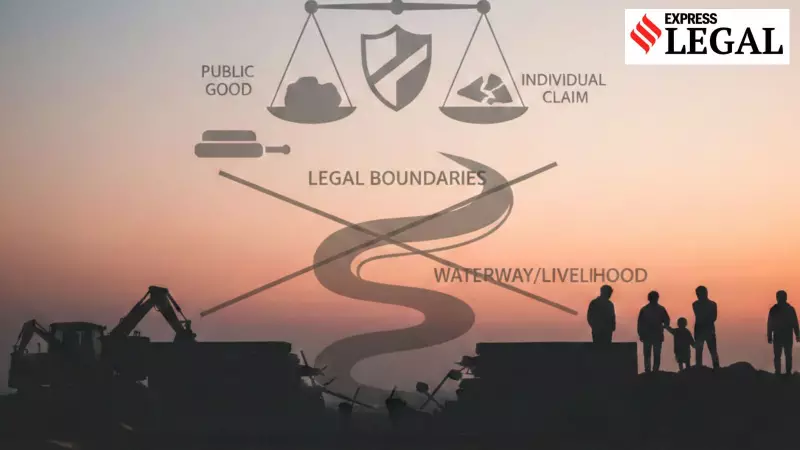
- The balance between individual rights and legitimate public purpose requirements
This judgment reinforces that while courts may be sympathetic to individual circumstances, they cannot grant relief contrary to law or outside established policy frameworks, especially when public land is urgently needed for development projects that serve broader community interests.