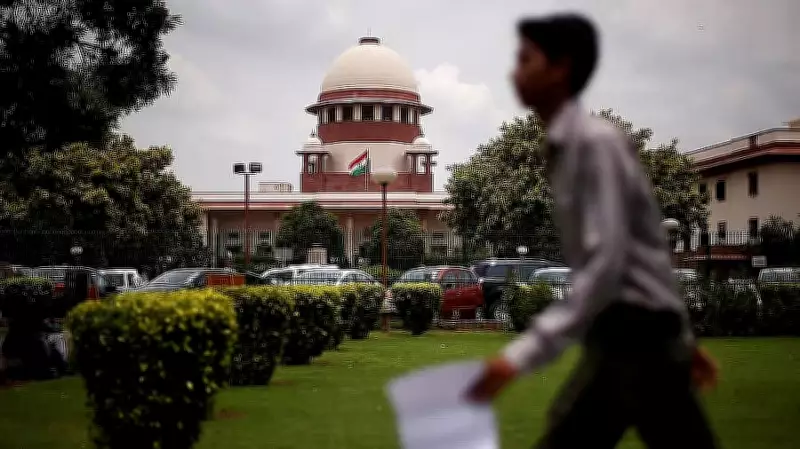
The Supreme Court has sought responses from the Centre, the National Commission for Protection of Child Rights (NCPCR), and the National Human Rights Commission (NHRC) on a Public Interest Litigation (PIL) demanding a ban on the employment of children in dance troupes and spas. The PIL highlights the vulnerability of children working in such establishments, often subjected to exploitation and abuse.
Background of the PIL
The PIL was filed by an advocate who argued that existing laws are insufficient to protect children from hazardous work environments in dance bars, troupes, and massage parlours. Senior advocate H.S. Phoolka, representing the petitioner, pointed out that while some states have set the minimum age for employment in spas and massage parlours at 18 years, there is no uniform national standard. He stressed that children working in these sectors are at high risk of physical and mental harm.
Legal Provisions and Gaps
The Child Labour (Prohibition and Regulation) Act, 1986, prohibits the employment of children below 14 years in hazardous occupations. However, the PIL contends that dance troupes and spas are not explicitly listed, creating a legal loophole. The petition seeks to include these establishments under the hazardous category, thereby banning child employment entirely. It also calls for stricter enforcement mechanisms and regular inspections.

Responses Sought
The Supreme Court bench, comprising Justices [names if known], issued notices to the central government, NCPCR, and NHRC, asking them to file their replies within four weeks. The court expressed concern over the lack of data on children employed in such sectors and directed the authorities to provide comprehensive statistics.
Arguments Presented
- Exploitation Risks: Children in dance troupes and spas are often forced into long working hours, denied education, and subjected to emotional and sexual abuse.
- State-Level Disparities: While some states have raised the minimum age to 18 for spa workers, others lack any specific regulations, leading to inconsistent protection.
- Need for Uniform Law: The petitioner urged the court to mandate a uniform minimum age of 18 for employment in all such establishments nationwide.
Next Hearing
The matter is scheduled for further hearing after the responses are filed. The court may also consider appointing a committee to study the issue and recommend preventive measures. The PIL is seen as a significant step towards strengthening child protection laws in India.