

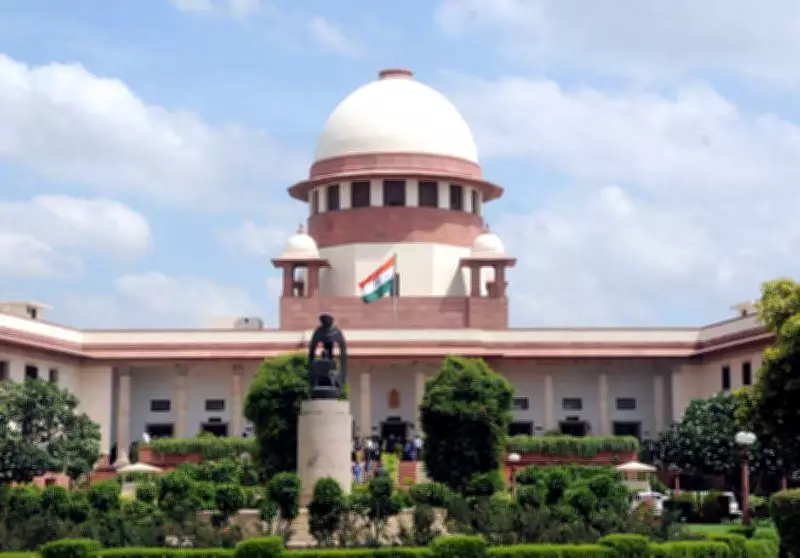
Supreme Court Issues Stern Warning Over Litigant's Father's Call to CJI's Brother
The Supreme Court of India expressed severe disapproval on Wednesday regarding the actions of a litigant whose father made a telephone call to the brother of Chief Justice of India Surya Kant. The call was made to object to a court order related to a case involving fraudulent admissions of general category candidates to a postgraduate medical course at a minority-run medical college in Meerut.
CJI's Strong Reaction in Open Court
Leading a three-judge bench, Chief Justice Surya Kant directly addressed the advocate representing petitioner Nikhil Kumar Punia. "You tell us why we should not initiate criminal contempt against the father of your client. Are you aware of what he has done? Should I disclose it in open court?" the CJI questioned. He revealed that the father had contacted his brother to inquire about how the Chief Justice had passed the order, stating, "He calls up my brother and asks him how the Chief Justice of India has passed this order… Will he dictate us? This is his conduct."
The CJI, visibly upset, emphasized that such behavior is unacceptable, declaring, "Nobody dares to do this. And you think I will transfer the case because of this? I have dealt with such elements for the last 23 years." In response, the petitioner's counsel claimed unawareness and apologized profusely, to which the CJI advised verifying the incident and considering withdrawal from the case, labeling it "sheer misconduct."

Background of the Fraudulent Admissions Case
The controversy stems from a petition filed by Nikhil Kumar Punia and another resident of Hisar, Haryana, who sought admission to a Post Graduate medical course under the Buddhist minority quota at Subharti Medical College in Meerut, Uttar Pradesh. The Supreme Court had previously, on January 28, termed this a "new type of fraud" after discovering that the candidates had applied as general category candidates in NEET-PG 2025 and did not belong to the economically weaker sections (EWS).
The bench dismissed the petition but kept the issue of procedures for granting minority certificates under consideration, awaiting a report from the Haryana Chief Secretary. The court had directed the state to explain the guidelines for issuing minority certificates and whether it is permissible for upper-caste converts to Buddhism, who previously identified as general category, to claim minority status for admissions.
Court's Directives and Future Proceedings
During the hearing, the CJI also expressed concerns that the petitioner might be attempting to manipulate matters, stating, "I think you (the petitioner) are trying to manipulate matters there as well. This is what you are doing." The bench deferred the hearing to the following week, pending compliance from the Haryana Government with the January 28 order.
It directed the Haryana Government to file its compliance report, warning that "If not, the Chief Secretary of the state of Haryana shall remain personally present in court on the next date." This underscores the court's firm stance on ensuring adherence to its directives and maintaining judicial integrity against external interference.
The case highlights ongoing issues in medical admissions and minority quotas, with the Supreme Court taking a strict approach to uphold transparency and prevent fraudulent practices in educational institutions.






