

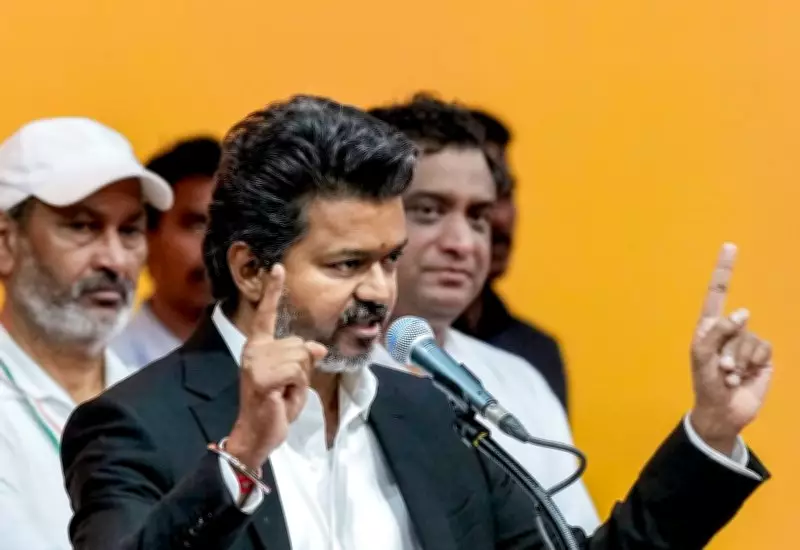
The C. Joseph Vijay-led Tamil Nadu government has approached the Supreme Court, challenging a Madras High Court order that permits the lighting of a ceremonial lamp on Thiruparankundram Hill near a dargah in the state. The state government argues that the practice could incite communal tensions.
Background of the Case
The dispute centers on a stone pillar, known as Deepathoon, located on Thiruparankundram Hill. The Sri Subramania Swamy Temple claims ownership of the land, while the Hazarath Sultan Sikkandar Badhusha Avuliya Dargah is situated nearby. The temple sought permission to light a sacred lamp during the annual Karthigai Deepam festival, which typically occurs in November-December.
On December 1, 2025, a single judge of the Madras High Court allowed the petition filed by Rama Ravikumar and others, directing that the lamp be lit on the festival day. The then DMK government, along with the temple management and the dargah, filed appeals against this order. However, on January 6, 2026, the Madurai Bench of the Madras High Court upheld the single judge's decision.

High Court's Reasoning
In its January 6 order, the high court dismissed the state government's concerns about law and order, describing them as an “imaginary ghost” created for convenience. The bench stated that the stone pillar belongs to the temple and that the Waqf Board currently has no locus standi in the matter. “It is ridiculous and hard to believe the fear of the mighty State that by allowing representatives of the Devasthanam to light the lamp at the stone pillar near the top of the hill located within its territory of Devasthanam land, on a particular day in a year, will cause disturbance to public peace,” the court observed.
The high court further warned that any disturbance would likely be “sponsored by the State itself” and urged that no government should “stoop to that level to achieve their political agenda.”
State Government's Appeal
The state government, now led by Chief Minister C. Joseph Vijay, has challenged the high court's order in the Supreme Court. The government maintains that lighting the lamp close to the dargah could lead to communal tensions, a claim the high court had previously rejected. The Supreme Court will now hear the matter and decide whether to intervene.
Implications
The case highlights ongoing tensions between religious communities in Tamil Nadu and raises questions about the balance between religious freedom and public order. The Supreme Court's decision could set a precedent for similar disputes across India, where places of worship of different faiths coexist in close proximity.






