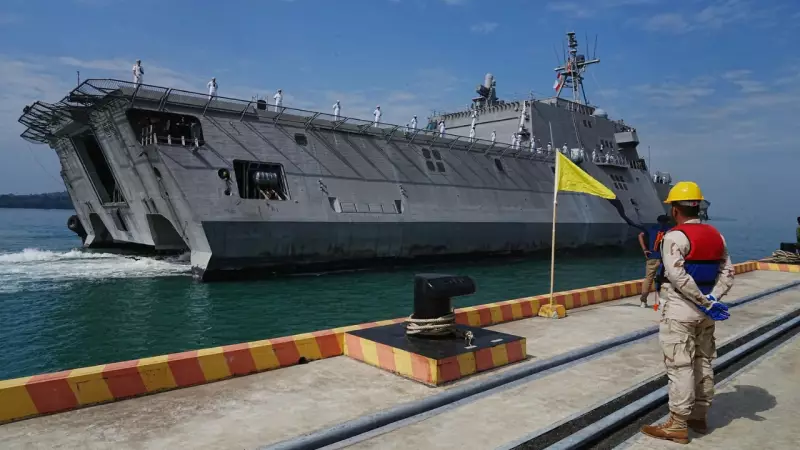
US Navy Warship Makes Historic Port Call at Chinese-Upgraded Cambodian Base
The United States Navy has achieved a significant diplomatic milestone with the docking of a warship at Cambodia's strategically important Ream Naval Base. This marks the first such visit since the facility underwent extensive renovations funded by China, highlighting evolving geopolitical dynamics in Southeast Asia.
Strategic Arrival Amid Regional Tensions
The USS Cincinnati, an Independence-class littoral combat ship, arrived at Ream Naval Base on Saturday, according to reports from the Associated Press. This port call represents the first US naval visit since the base reopened last year following major upgrades. The timing is particularly noteworthy given years of international speculation about China's potential exclusive access to this Gulf of Thailand facility.
Ream Naval Base has been a focal point of global attention since 2019, when media investigations suggested a secret agreement might grant China military usage rights for decades. While Beijing financed substantial improvements including new docking infrastructure, Cambodian authorities have repeatedly denied providing any exclusive privileges to China.
Geopolitical Implications and Western Concerns
Washington has expressed apprehension that the enhanced base could serve as a strategic Chinese outpost near the contested South China Sea, where Beijing asserts extensive territorial claims. Despite these concerns, Cambodian leadership maintains that Ream remains accessible to all friendly nations.
"Our government has worked diligently to construct this port to accommodate vessels from any nation wishing to dock in Cambodia," stated In Sokhemra, deputy commander of Ream Naval Base. "American, Australian, Japanese, or other ships are all welcome here."
Symbolic Docking Near Chinese Vessels
The USS Cincinnati moored approximately 150 meters from two Chinese warships already stationed at the base, creating a visually striking representation of contemporary great-power competition. Commanding Officer Andrew J. Recame described the moment as profoundly symbolic for US-Cambodia relations.
"It is our privilege and honor to be here as the first US naval vessel to moor pierside at Ream Naval Base," Recame told reporters. "We hope this visit establishes a lasting tradition of friendship between our nations."
Cambodian officials indicated the five-day visit would strengthen bilateral cooperation while demonstrating Phnom Penh's commitment to transparent international partnerships.
Rebuilding US-Cambodia Defense Relations
This naval visit forms part of broader efforts to repair strained military ties between Washington and Phnom Penh. Historical data shows approximately 37 US warships visited Cambodian ports between 2003 and 2026, though relations deteriorated significantly in recent years.
A diplomatic breakthrough occurred in 2024 when then-US Defense Secretary Lloyd Austin visited Cambodia for discussions with Prime Minister Hun Manet about regional security cooperation. Later that year, the USS Savannah docked at Sihanoukville's civilian port, marking the first US military port call in eight years.
The Cincinnati's arrival coincides with a scheduled visit by US Indo-Pacific Command chief Admiral Samuel Paparo, who plans to meet Cambodian Defense Minister Tea Seiha, indicating ongoing high-level engagement.
Cambodia's Delicate Balancing Act
As one of China's closest regional allies, Cambodia has received billions in infrastructure investment from Beijing under former leader Hun Sen. While Chinese warships have utilized Ream since late 2023, Cambodian officials emphasize the base isn't reserved for any single power.
Following the base's reopening, Japanese warships were the first foreign vessels to dock there, with the US Navy now following suit. Phnom Penh presents these developments as evidence of its neutral position amid escalating US-China competition across the Indo-Pacific region.
This carefully orchestrated naval diplomacy reflects Cambodia's attempt to maintain relationships with both Western powers and China while asserting its sovereignty over strategic assets. The presence of American and Chinese vessels simultaneously at Ream Naval Base creates a microcosm of larger regional dynamics, where Southeast Asian nations navigate complex alliances amid superpower rivalry.