

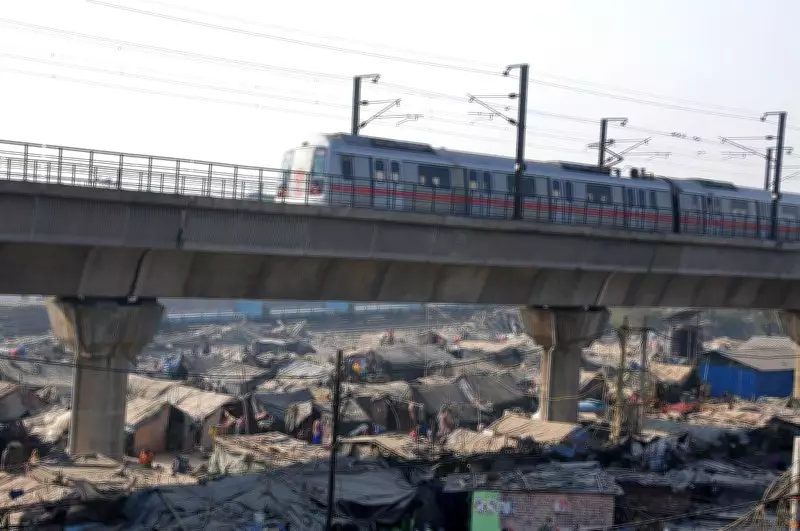
DUSIB Approves Major Revision in Slum Rehabilitation Norms
The Delhi Urban Shelter Improvement Board (DUSIB) on Tuesday approved a significant revision in slum rehabilitation norms, extending rehabilitation benefits to all eligible families residing in JJ clusters established up to January 1, 2025. This decision, taken at the 36th Board meeting chaired by Chief Minister Rekha Gupta, is expected to make around 4-5 lakh families—nearly 20 lakh people—eligible for permanent housing under the rehabilitation programme.
Historic Decision for Delhi's Slum Residents
Chief Minister Rekha Gupta described the move as a "historic decision for Delhi's slum residents," stating that all eligible families settled until January 1, 2025, will receive rehabilitation benefits. She emphasized that the decision clears the path for permanent housing for approximately 4-5 lakh families, benefiting nearly 20 lakh people. The meeting was attended by Urban Development Minister Ashish Sood, Chief Secretary Rajiv Verma, and senior officials.
Alignment with Central Government Vision
Officials said the decision follows the outcomes of a recent high-level review meeting chaired by Union Home Minister and Minister of Cooperation Amit Shah and aligns with the provisions of the Delhi Slum and JJ Cluster Rehabilitation and Relocation Policy, 2026. CM Gupta noted that the initiative reflects the Centre's vision to provide dignified housing and improved living conditions to economically weaker sections. She added that Prime Minister Narendra Modi's vision of 'a permanent home for every poor family' gains new momentum in Delhi.

Comprehensive Infrastructure and In-Situ Rehabilitation
Eligible beneficiaries will be provided multi-storey flats equipped with essential civic amenities and modern infrastructure. The rehabilitation programme will seek to relocate families within or as close as possible to their existing settlements, in line with the government's commitment to in-situ rehabilitation. CM Gupta reiterated the commitment of 'Jahan Jhuggi, Wahan Makaan' (where the hut, there the home), stating that multi-storey flats with modern amenities will be provided.
Social and Civic Amenities in Rehabilitation Colonies
Officials said the government's objective extends beyond merely providing housing. The proposed rehabilitation colonies will be developed with comprehensive social and civic infrastructure, including anganwadi centres, schools, health facilities, children's playgrounds, and other essential public amenities to ensure an improved quality of life for residents. The new policy framework also considers changing family structures and population growth within JJ clusters, with provisions for members of the same family living in separate units on different floors to be covered subject to payment of prescribed additional charges.
Implementation Through PPP Model
Calling housing a matter of dignity and security, CM Gupta said the decision marks an important step towards ensuring safer, healthier, and more dignified living conditions for lakhs of Delhi residents. She added that coordinated efforts between the Centre and the Delhi Government would bring transformative changes to the lives of slum dwellers. The rehabilitation programme will be implemented in mission mode through the Public Private Partnership (PPP) model, with the government aiming to ensure that every eligible family receives access to safe, permanent, and improved housing.






