Jatana Village Reports Zero Stubble Burning for Six Years
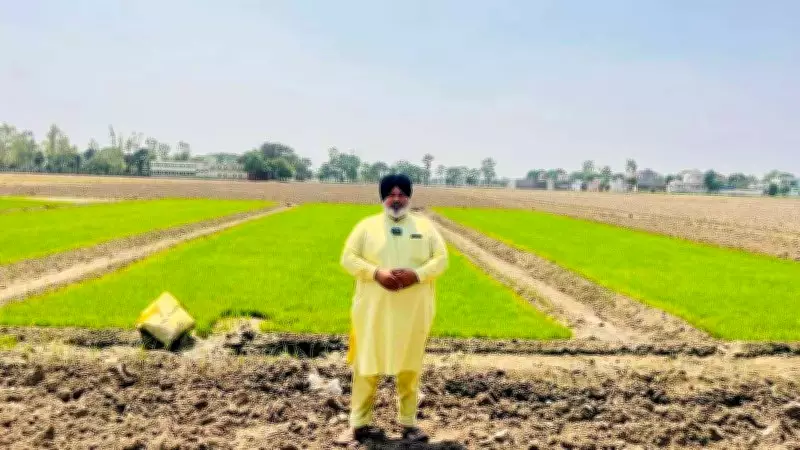
As the paddy season begins across Punjab, the state once again faces the perennial challenge of stubble burning. However, Jatana village in Khanna block has reported no farm fires in the past six years, according to data from the state Agriculture Department. The transformation is led by local farmer Amandeep Singh Mangat, whose resolve has inspired collective efforts to adopt sustainable farming practices.
Mangat, who cultivates 39 acres—partly owned, partly rented—has shown that conviction backed by science can transform farming. His dedication to scientific farming began when he attended agricultural camps and 'kisan melas' at Punjab Agricultural University (PAU). His association with Krishi Vigyan Kendra (KVK), Samrala, in 2016 proved transformational.
From Conventional Grower to Sustainable Farmer
“Had it not been for the continuous help and assistance of the CII Foundation and the KVK, I would still be a conventional grower,” Mangat said. After attending seed production and crop residue management trainings, he began in-situ incorporation of paddy straw on one acre. Observing healthier soil and better yields, he gradually expanded the practice to his entire field.

The turning point came when he compared conventional wheat sowing with the happy seeder method. “In a happy seeder plot, weed count was less, irrigation needs dropped by 25 per cent and the yield was higher. I saved Rs 2,000 to Rs 2,500 per acre in preparation costs,” he added. By 2018, he was sowing 10 acres with the happy seeder.
Community-Wide Adoption of Residue Management
Mangat's conviction soon spread across the village. With support from the CII Foundation, the village acquired 16 happy seeders on subsidy. Soon after, stubble burning vanished from the fields. The village now has happy seeders, super seeders and reversible ploughs, and is equipped to handle crop residue without fire. “No to stubble burning” is etched on walls across the village, painted on the bus stand and written on motor rooms in the fields.
Impressed by its commitment to sustainable practices, delegations from the Union Ministry of Agriculture and the Commission for Air Quality Management (CAQM) have visited the village. The impact has also rippled outwards. Farmers in neighbouring Begowal, Mehdoodan, Araichan and Chak Sarwan Nath villages have followed suit, aided by Jatana’s custom hiring of residue management machinery.
Environmental and Economic Benefits
With an annual income of nearly Rs 50 lakh, Mangat’s success is not just financial, it is environmental and communal. “The soil health of my fields has improved, fertiliser use has come down and I am saving water,” he says with pride. His journey underscores how science, persistence and collaboration can rewrite farming practices.
Mangat has a simple yet powerful message for fellow farmers: “Adopt in-situ methods, embrace technology and shun stubble-burning. The future of our soil and air depends on it.”