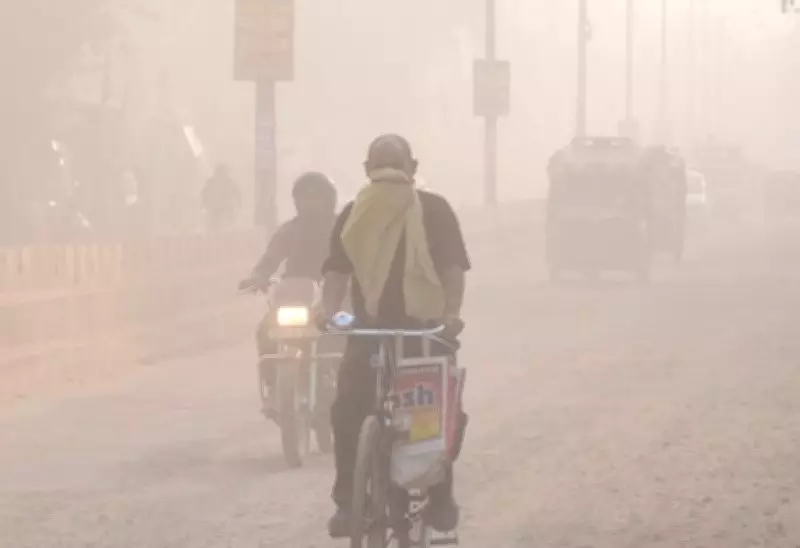
The Haryana State Pollution Control Board (HSPCB) has identified 2,912 air-polluting industrial units across 14 National Capital Region (NCR) districts, with Manesar emerging as the state's biggest industrial pollution hotspot. The survey reveals widespread non-compliance with pollution-control norms, prompting an intensified enforcement drive.
Manesar: Haryana's Industrial Pollution Epicenter
The HSPCB survey found that Manesar has the highest concentration of air-polluting industrial units in Haryana. Rapid industrialisation, expanding manufacturing clusters, and fast-paced urban growth have significantly increased emissions in the area. The findings are particularly relevant for Gurugram, where industrial emissions from the Manesar–Bawal belt, combined with vehicular pollution and construction activity, contribute heavily to worsening air quality.
Widespread Non-Compliance with Pollution Norms
The survey identified major gaps in regulatory compliance. Of the 986 industrial units required to install Air Pollution Control Devices (APCDs), only 516 had complied, leaving 470 units operating without mandatory pollution-control equipment. Additionally, 1,349 industries were directed to install Online Continuous Emission Monitoring Systems (OCEMS) that transmit real-time emissions data to regulators. While 1,286 units have complied, 63 are yet to connect their monitoring systems.

Enforcement Actions and Deadlines
The pollution control board has initiated a phased enforcement. Industries continuing to violate environmental norms face closure orders. The survey also identified 56 industrial units operating in non-conforming areas. Between January and April, authorities shut down 36 polluting units, followed by a further 20 closures in May. The HSPCB has set June 30 as the deadline to complete inspections across NCR districts and has directed all remaining violators to ensure compliance.
Impact on Gurugram's Air Quality
Gurugram consistently records some of the country's poorest air quality levels during winter, with PM2.5 concentrations often rising to several times above safe limits. Experts say emissions from industries, heavy traffic on the Delhi–Jaipur Expressway, dust from construction activity, and seasonal factors such as stubble burning collectively worsen pollution levels. The latest survey highlights how industrial emissions remain a key contributor to the region's air-quality crisis, reinforcing the need for stricter enforcement to curb pollution.