

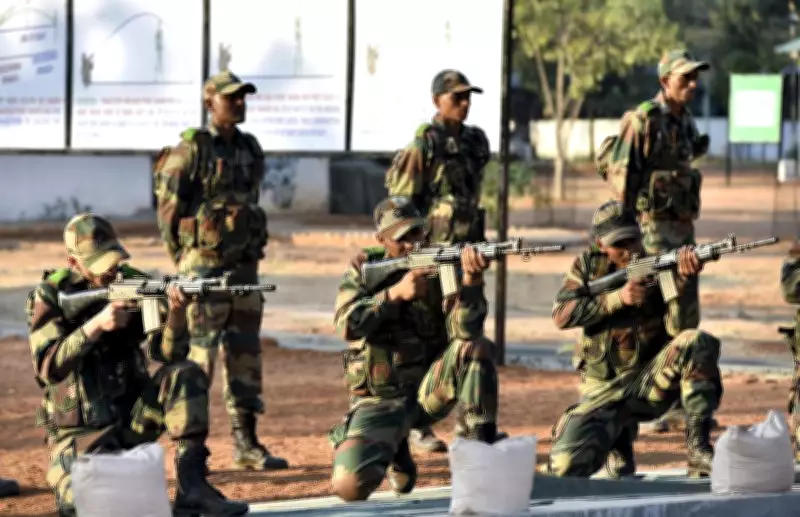
Background and Implementation of Agnipath
The Agnipath scheme, announced by the Indian government as a major reform in the armed forces, was implemented in 2022 with the aim of reducing the pension burden and creating a younger, more agile fighting force. Under this scheme, soldiers, sailors, and airmen are recruited as "Agniveers" for a four-year period, after which 25% are retained while the rest return to civilian life with a severance package and job assurance. Now, as the first batch of Agniveers nears completion of their engagement, the real challenge is whether the model can create and sustain military effectiveness for future conflicts, rather than merely reducing pension costs or lowering the average age of the armed forces.
Lack of Pilot Project Raises Concerns
Air Marshal Amit Tiwari (Retd) notes that before implementing a reform of such magnitude, a pilot project is typically carried out on a smaller scale to validate assumptions, identify challenges, and suggest amendments to ensure military effectiveness is retained or enhanced. However, it is not known whether any such pilot project was undertaken prior to the simultaneous implementation of the scheme in all three services. The defence forces are a unique arm of the state where personnel work towards making any state decision a success, and professional military ethos does not encourage debate on state directives. Consequently, acceptance of a policy by the services should not automatically be construed as proof of its long-term effectiveness. The effectiveness of the armed forces cannot be fully assessed in peacetime; it is like insurance whose efficacy can only be realized during a crisis. Therefore, any changes in the structure or functioning of the defence forces need diligent deliberation at all levels.
Defence Pension vs Modernisation Expenditure
One of the main objectives of implementing the Agnipath scheme was to address the burgeoning defence pension budget. According to some analyses, the defence pension outlay increased at an annual rate of about 20% from 2000 to 2026, whereas expenditure on modernisation and equipment grew at an annual rate of about 17%. Presently, the defence pension outlay constitutes about 22% of the defence budget. A need was felt to reduce the pension bill to have more funds available for modernisation. However, military pension cannot be viewed only through the accounting lens. The higher defence pension bill is a consequence of maintaining a large standing army in view of the threat to national sovereignty and territorial integrity. These soldiers, sailors, and airmen are not merely government employees; they also commit themselves to work in adverse conditions in the face of possible injury and even death in service of the nation. They retire much earlier than their civilian counterparts to keep the armed forces young. National security is not a welfare expenditure but an imperative for the state. Repeated calls for reduction of the pension bill of the defence forces, without similar efforts for other organs of the government, may affect morale and effectiveness. However, this does not imply that pension reforms should never be attempted; fiscal prudence is necessary for the optimum utilisation of national resources.


Impact on NCO Cadre and Technical Services
The other objective of the Agnipath scheme was to create a younger, agile, and more economically viable fighting force. This approach appears to assume that the primary function of a soldier is firing, and it is economically prudent to replace a soldier with a 16-year career (involving periodic increments and pension commitments) with four successive recruits over the same period without pay enhancement or pension liability. However, this model overlooks the fact that modern militaries rely on a time-tested hierarchy where non-commissioned officers (NCOs) and junior commissioned officers (JCOs) play an important role in the functioning of units. These individuals translate commanders' intentions into action, mentor young soldiers, ensure discipline, and provide institutional memory gained through years of experience. One of the reasons often attributed to the limited success of the Russian Army in Ukraine is the quality and strength of its NCO cadre, which is affected by excessive reliance on short-term contract recruitment. The true value of experience becomes apparent only during prolonged wars under adverse conditions.
Challenges in Technical Training and Flight Safety
This issue gets further compounded when considering the effect of the limited tenure of Agniveers on technical services such as the Air Force and the Navy. The technical training in these services is often more than a year long, leaving barely three years for active service at the unit level—sufficient only for on-the-job familiarisation. Initially, technicians are permitted to perform only simple maintenance tasks under supervision. Their progression to more complex maintenance activities is dependent upon performance, experience, technical courses, and supervised exposure to sophisticated systems. Any curtailment of these stringent training schedules may result in compromising flight safety. Due to the limited tenure of four years, 75% of the Agniveers will leave before making any meaningful contribution to the service. The effect may not become visible immediately due to the presence of the legacy workforce, but a severe capability gap is likely to emerge within four to six years as experienced personnel retire. This continuous churn in the workforce may also hamper future multi-domain operations, which rely on experienced, cross-domain-qualified personnel.
Morale and Cohesion Concerns
An additional issue that may affect the morale and cohesiveness of fighting units is the difference in terms and conditions of service between Agniveers and regular soldiers. Leaving aside their shorter tenure, even the pay package and leave entitlement of Agniveers are different despite performing similar tasks. Policies that create disparity in benefits or entitlements while serving have the potential to affect morale and cohesion and therefore merit reconsideration.
The 'Catch-22' Dilemma of Post-Service Employment
There is also a 'Catch-22' dilemma in the Agnipath scheme. If highly attractive employment opportunities are provided to exiting Agniveers, many may prefer to leave the rigours of military service and join the civilian workforce. This phenomenon is common across the world, where large numbers of military pilots prefer to join commercial aviation because of a more stable life and better pay package. Conversely, inadequate post-tenure employment opportunities may reduce the attractiveness of joining Agnipath in the first place.
Suggestions for Refinement
As in any reform, Agnipath has thrown up new challenges as well as opportunities. After four years of implementation, there is a need to evaluate the scheme within the broader framework of military effectiveness. A few suggestions that deserve due diligence are as follows. India has traditionally maintained common approaches to pay determination through Central Pay Commissions. A similar comprehensive approach towards pension liabilities across government services may generate better options for long-term pension reform. The retention of personnel should be based on operational requirements, workforce studies, and financial considerations rather than being tied to a fixed target. The feasibility of retaining 50% of Agniveers deserves serious consideration. It would ensure a larger pool of experienced personnel for technical services, provide stronger career incentives, and encourage greater commitment from recruits. It would also create a larger pool of experienced personnel available for leadership positions and technical trades.
To create a qualified workforce for technical services, one possible modification could be to enhance the initial engagement period to 10-12 years. This would preserve the original objective of reducing the pensionary bill while ensuring professional development and retention of skilled manpower. It would also strengthen the NCO cadre, which forms the backbone of military effectiveness. An option to reduce training duration could be to induct qualified recruits from Industrial Training Institutes (ITIs), polytechnics, and other technical institutions. Such recruits, with prior technical knowledge, would help reduce both training duration and cost. This approach would also support broader national initiatives such as Skill India, vocational education programmes, and the vision of Atmanirbhar Bharat.
To resolve the 'Catch-22' dilemma, policymakers must strike a delicate balance in post-service career options. They must be sufficiently attractive to encourage recruitment, but not so attractive that they unintentionally incentivise the departure of the military's best talent.
Conclusion: Evidence-Based Assessment Needed
The Agnipath scheme was implemented as part of long-awaited defence reforms to reduce the pensionary bill and make the armed forces younger and more agile. These are worthy objectives, provided military effectiveness is not compromised. As the first batch of Agniveers completes its tenure, India will have the opportunity to assess the scheme based on evidence rather than assumptions. The Agnipath scheme must ultimately be judged not only by the financial savings it generates but also by its contribution to deterrence, warfighting capability, and national security. National security is too important for rigid positions. Rather than treating the scheme as either a complete success or a complete failure, policymakers should remain open to refinement. Future multi-domain warfare will not only demand physically fit soldiers but will also require experienced leaders, skilled technicians, and mature professionals.





