Sanjeev Balyan vs Sangeet Som: Factional Feud Threatens BJP's Western UP Stronghold
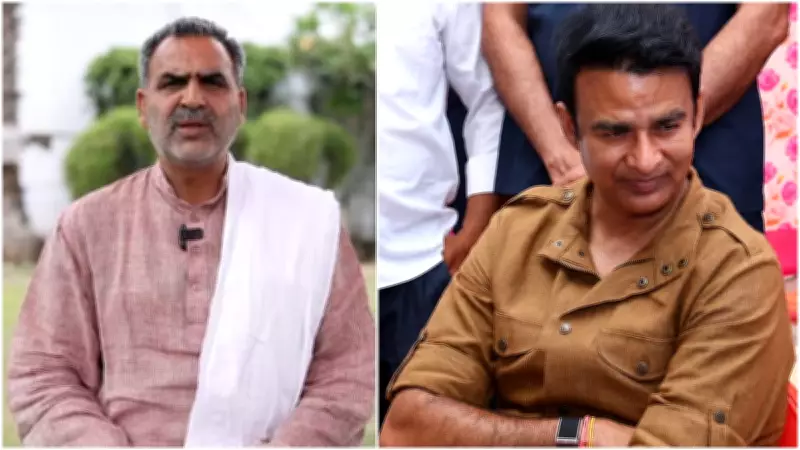
In a significant development that could impact the Bharatiya Janata Party's electoral prospects in Western Uttar Pradesh, a simmering rivalry between two prominent leaders has erupted into public view. Union Minister Sanjeev Balyan, without explicitly naming his adversary, delivered pointed remarks that were widely interpreted as targeting fellow party member and influential Thakur leader Sangeet Som.
Veiled Criticism Exposes Deep-Rooted Factionalism
During a recent public address, Balyan made comments that political observers immediately recognized as directed at Som, his long-standing rival within the party's Western Uttar Pradesh unit. Although the minister refrained from mentioning names, the context and timing of his statements left little doubt about their intended target. This public airing of grievances represents a serious escalation in what has been a persistent internal conflict between these two powerful regional figures.
The Balyan-Som rivalry has been brewing for years, rooted in competing political ambitions and differing approaches to representing the crucial Western UP region. Both leaders command significant followings within their respective communities and have played instrumental roles in the BJP's electoral successes in this politically vital area. However, their inability to work cohesively now threatens to undermine the party's organizational strength at a critical juncture.

Regional Dynamics and Electoral Implications
Western Uttar Pradesh represents one of the most politically significant regions in India, with its complex caste equations and history of determining electoral outcomes at both state and national levels. The BJP has invested considerable resources in consolidating its position here, making internal discord between key leaders particularly damaging.
Sangeet Som, a firebrand Thakur leader known for his strong grassroots presence, has been a polarizing figure within the party. His influence extends across several districts where caste dynamics play a decisive role in electoral politics. Meanwhile, Sanjeev Balyan, a Jat leader and Union Minister, represents a different but equally important constituency within the region's social fabric.
The public nature of their conflict comes at a sensitive time for the BJP, which is preparing for upcoming electoral battles in Uttar Pradesh. Party insiders express concern that this factionalism could:
- Create confusion among party workers about leadership directives
- Alienate important voter segments who look to these leaders for guidance
- Provide opposition parties with ammunition to attack BJP unity
- Complicate candidate selection and campaign coordination
Broader Implications for BJP's Uttar Pradesh Strategy
This public rift between Balyan and Som highlights a broader challenge facing the BJP in Uttar Pradesh: managing competing ambitions within its own ranks while maintaining a united front against political opponents. The party's success in India's most populous state has often depended on its ability to present a cohesive leadership structure that transcends individual rivalries.
Political analysts note that such internal conflicts, if left unresolved, could have cascading effects on the BJP's organizational machinery in Western UP. The region has been a traditional stronghold for the party, but maintaining this advantage requires disciplined coordination among all leaders, particularly those with substantial individual followings.
The BJP leadership now faces the delicate task of mediating between these warring factions without appearing to take sides or undermining either leader's standing within their respective communities. How the party manages this internal challenge will likely influence its electoral performance in upcoming contests and determine whether Western Uttar Pradesh remains a reliable bastion of support.
As the situation develops, all eyes remain on how the BJP's central leadership addresses this growing rift between two of its most prominent Western UP figures. The resolution—or escalation—of this conflict could significantly shape the political landscape in one of India's most electorally crucial regions.