

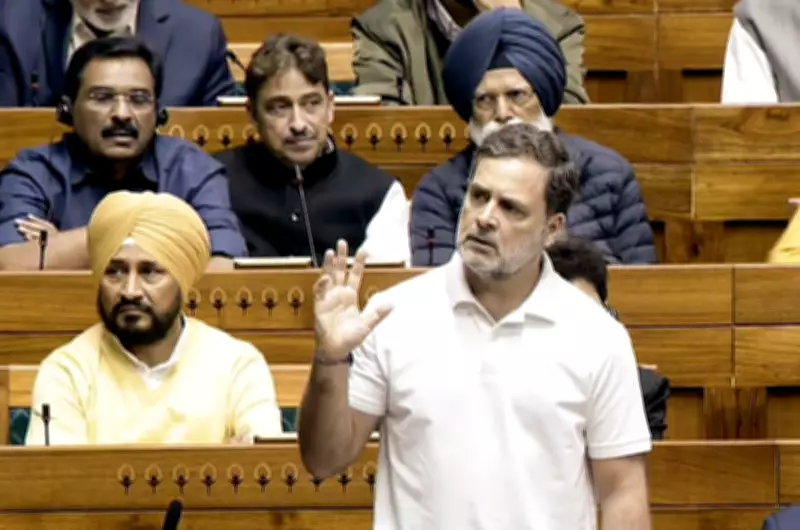
BJP MP Nishikant Dubey Submits Notice to Move Motion Against Rahul Gandhi in Lok Sabha
In a significant political development, Bharatiya Janata Party (BJP) Member of Parliament Nishikant Dubey has formally submitted a notice to move a motion against Congress leader Rahul Gandhi in the Lok Sabha. This move marks a sharp escalation in the ongoing political tensions between the ruling party and the opposition, potentially setting the stage for a heated parliamentary debate.
Details of the Motion Notice
The notice, submitted by Dubey, seeks to initiate a motion that could lead to disciplinary action or a discussion targeting Rahul Gandhi's conduct or statements. While the specific grounds for the motion have not been fully disclosed in initial reports, it is understood to relate to recent political controversies or remarks made by the Congress leader. This procedural step is part of parliamentary rules that allow MPs to raise issues of privilege or misconduct against fellow members.
Political Context and Implications
This action comes amid a backdrop of heightened political rivalry, with the BJP and Congress frequently clashing over various national issues. The motion against Rahul Gandhi, a key figure in the opposition, could further polarize the Lok Sabha and impact legislative proceedings. Observers note that such motions are often used as strategic tools to put political opponents on the defensive and sway public opinion.

The submission of this notice underscores the intensifying confrontations in Indian politics, particularly in the lead-up to upcoming elections or during sessions focused on governance and policy debates. It may also influence the dynamics within the Congress party, as Rahul Gandhi's leadership and parliamentary behavior come under scrutiny.
Potential Outcomes and Reactions
If the motion is admitted by the Lok Sabha Speaker, it could result in a formal debate, with MPs from both sides presenting their arguments. Possible outcomes include a censure, an apology demand, or even disciplinary measures, depending on the findings. The Congress party is expected to strongly oppose the motion, labeling it as a politically motivated attack aimed at diverting attention from substantive issues.
Political analysts suggest that this move could galvanize support among BJP's base while rallying Congress supporters in defense of their leader. It also highlights the role of parliamentary procedures in shaping political narratives and holding elected representatives accountable.
Broader Impact on Parliamentary Functioning
This incident raises questions about the decorum and efficiency of parliamentary sessions, as such motions can lead to disruptions and delays in legislative work. It emphasizes the need for balanced discourse and adherence to parliamentary norms to ensure that the Lok Sabha remains a forum for constructive debate rather than partisan conflicts.
In summary, BJP MP Nishikant Dubey's notice to move a motion against Rahul Gandhi adds a new layer of complexity to India's political landscape, with potential ramifications for both parties and the functioning of democracy.






