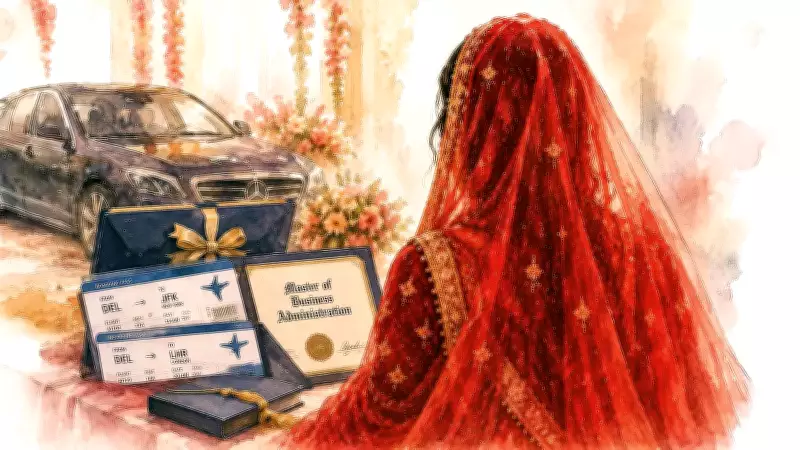
A video that circulated widely in 2024 was shared by many with a mix of outrage and familiarity. At a wedding somewhere in north India, a man stands at the microphone and reads aloud, with the calm of reciting a grocery list, the 'gifts' for the groom: a Mercedes-Benz E200, a Toyota Fortuner, 1.25 kg of gold, 7 kg of silver, and Rs 72 lakh in cash. None of the guests appears shocked. This is perhaps the clearest indication of how dowry survives in modern India.
Renewed Outrage After Recent Deaths
Public outrage around dowry has resurfaced in recent weeks following a series of deaths, including Twisha Sharma in Bhopal, Deepika Nagar in Greater Noida, and the recent case of Pushpendri Devi in Meerut. These incidents have brought the issue back into the spotlight, but the practice itself has evolved.
Dowry in Disguise
According to those who work with survivors of marital violence, from Kolkata to Bengaluru to rural Assam, the word 'dowry' is being used less frequently. Instead, it hides behind softer, more socially accepted vocabulary such as 'gifts', 'help', 'support', and 'settling the couple'. In many cases, the bride is now expected to pay loan EMIs, fund the groom's MBA fees, or contribute to household expenses as a form of dowry.

This transformation makes it harder to identify and combat the practice. While the overt exchange of cash and gold may have decreased, the underlying expectation of financial contribution from the bride's family remains strong. The pressure on women to support their husbands financially, sometimes even before marriage, is a new disguise for an old tradition.
Activists argue that this shift reflects a deeper societal acceptance of dowry, despite laws prohibiting it. The recent deaths have sparked calls for stricter enforcement and greater awareness, but changing deep-rooted norms remains a challenge.