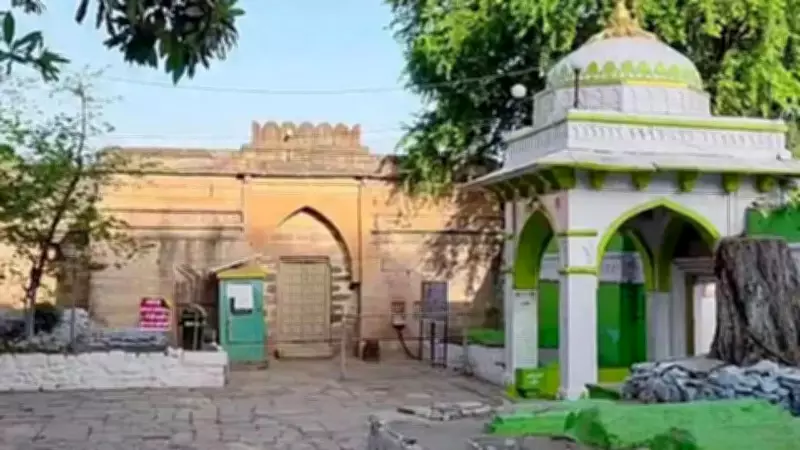
NEW DELHI: Two caveat pleas were filed in the Supreme Court on Friday, just hours after the Madhya Pradesh High Court declared the disputed Bhojshala-Kamal Maula complex in Dhar as a temple dedicated to Goddess Vagdevi (Saraswati). The pleas were submitted in anticipation of a potential challenge to the verdict by the Muslim side.
Understanding Caveat Pleas
A caveat plea is a precautionary legal notice filed by an individual who expects that another party may approach the court against them. It serves as a legal safeguard, ensuring that the court hears the caveator before passing any order or granting relief in the matter.
First Caveat Petition
The first caveat petition was filed by Jitendra Singh Vishen, a Hindu-side litigant who is also a petitioner in the Bhojshala dispute before the Madhya Pradesh High Court. The plea sought a direction that no order be passed by the apex court without hearing him if the verdict is challenged.

Second Caveat Petition
Subsequently, another caveat plea was filed by the main Hindu-side petitioner through advocate Vishnu Shankar Jain, seeking similar protection before any proceedings are initiated in the Supreme Court.
High Court Verdict
The caveat petitions were filed shortly after the Indore bench of the Madhya Pradesh High Court declared that the religious character of the disputed monument is that of Bhojshala, a temple dedicated to Goddess Saraswati. The court stated, "The religious character of the disputed area is held to be Bhojshala with a temple of Goddess Saraswati."
Quashing of ASI Arrangement
The high court also quashed the Archaeological Survey of India's (ASI) 2003 arrangement, which had restricted Hindu worship and permitted Muslims to offer namaz at the complex. The court directed that the Union government and the ASI would decide the future administration and management of the Bhojshala temple, while the ASI would continue to supervise preservation and regulation of religious practices at the protected monument under the ASI Act, 1958.
Idol and Land Requests
On the Hindu side's demand for the return of the idol of Goddess Saraswati, allegedly kept in a London museum, the high court said the Centre may consider representations already submitted. Additionally, the court observed that if the Muslim side seeks allotment of suitable land within Dhar district for a mosque or prayer site, the state government may consider the request in accordance with law.
Background of the Dispute
The Bhojshala-Kamal Maula complex dispute has been a long-standing religious and legal issue. Hindus claim the site as an ancient Saraswati temple linked to Raja Bhoj, while Muslims maintain it is the Kamal Maula mosque. Under the 2003 ASI arrangement, Hindus were allowed to perform puja on Tuesdays, and Muslims offered namaz on Fridays. This arrangement remained in force while the site continued under ASI protection and supervision.
About the Author
The TOI News Desk comprises a dedicated team of journalists operating around the clock to deliver current and comprehensive news to readers of The Times of India worldwide. With a commitment to excellence, the team gathers, verifies, and presents breaking news, in-depth analysis, and insightful reports on various topics.