Chhattisgarh Marks Historic Day as Armed Naxalism Declared Finished
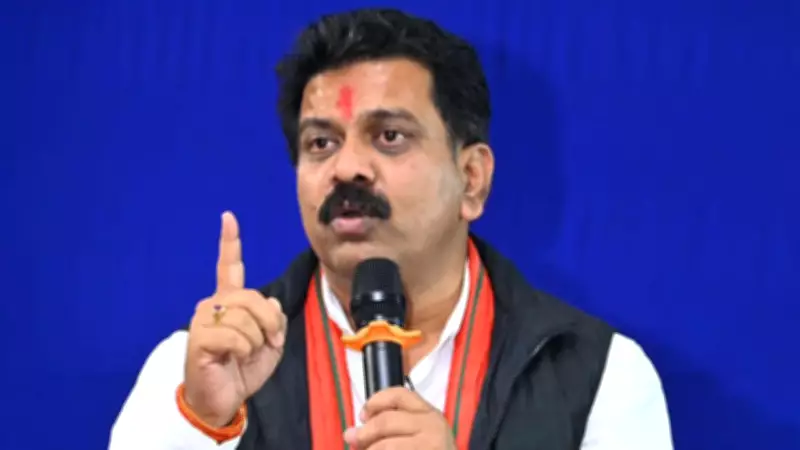
In a landmark announcement, Chhattisgarh Deputy Chief Minister and Home Minister Vijay Sharma declared March 31 a "historic and unforgettable" day for the state, proclaiming that armed Naxalism has come to an end after a five-decade insurgency. Speaking to the media in Raipur, Sharma asserted that the armed Maoist structure in Chhattisgarh has been completely dismantled, with only scattered, largely unarmed remnants remaining.
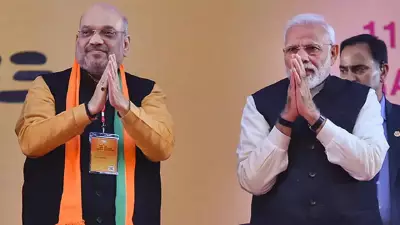
Meeting Amit Shah's Deadline with Precision Operations
The declaration coincides with the deadline repeatedly set by Union Home Minister Amit Shah to end Naxalism by March 31, 2026. Sharma credited this achievement to a combination of enhanced security operations, technology-driven intelligence, and robust community engagement. He highlighted how advanced tech-based surveillance and precise jungle mapping led to successful missions where many Maoists were neutralized while security forces often escaped unharmed.
"The Maoist organization is now 99% finished, with only a few remnants left in parts of north Bastar around Kanker," Sharma stated, addressing allegations of fake encounters by pointing to Maoist communications that acknowledged cadre losses. He added that some southern cadres have shed weapons and uniforms to reintegrate into village life, emphasizing, "There is no reason for fear now."

Political Will and Strategic Shift Under BJP Government
Sharma attributed the breakthrough not to changes in ground machinery but to a transformative shift in political resolve after the BJP came to power in December 2023. "No officer or employee was changed in Bastar. The government changed, and the resolve changed," he explained, noting that the state adopted a sharper mission under the new administration.
He traced this shift to a high-level review in January 2024, chaired by Amit Shah, which identified Chhattisgarh as the core theatre of the Maoist conflict, accounting for 75% of India's Naxal footprint. From this assessment, a multi-agency roadmap was developed with inputs from CRPF, BSF, state police, and other forces to uproot armed Maoism.
Rehabilitation Over Surrender: A Softer Approach
Beyond military success, Sharma projected the anti-Naxal drive as a comprehensive social and rehabilitation effort. The government softened its language, replacing "surrender" with "rehabilitation" to make cadres more comfortable. Rehab centers were linked to vocational training, attracting larger numbers of cadres to skill programs.
"The decisive turn was social as much as military," Sharma said, noting that Bastar's people began demanding roads, schools, hospitals, and connectivity over fear and isolation. He introduced a barcode-based public feedback mechanism and offered unconditional talks, including video calls, to facilitate mainstream reintegration.
Local Mediation and Mass Returns
Sharma spread credit widely, acknowledging Bastar's communities, security forces, tribal leaders, panchayat representatives, journalists, and government campaigns like Bastar Olympics and Bastar Pandum. Repeated meetings with tribal groups—Dorla, Bhatra, Muria, Madia, and Gond—encouraged local mediation, leading to numerous surrenders.
He cited October 2025 as a turning point, when the surrender of 210 Maoists triggered mass returns. Over the past two years, more than 3,000 cadres have been rehabilitated, around 2,000 armed cadres arrested, and 536 neutralized. In a vivid depiction of the change, Sharma shared that villagers in Bastar are now "laughing freely" and feel truly liberated for the first time.