Congress Leader Jairam Ramesh Targets Government on Education Affordability
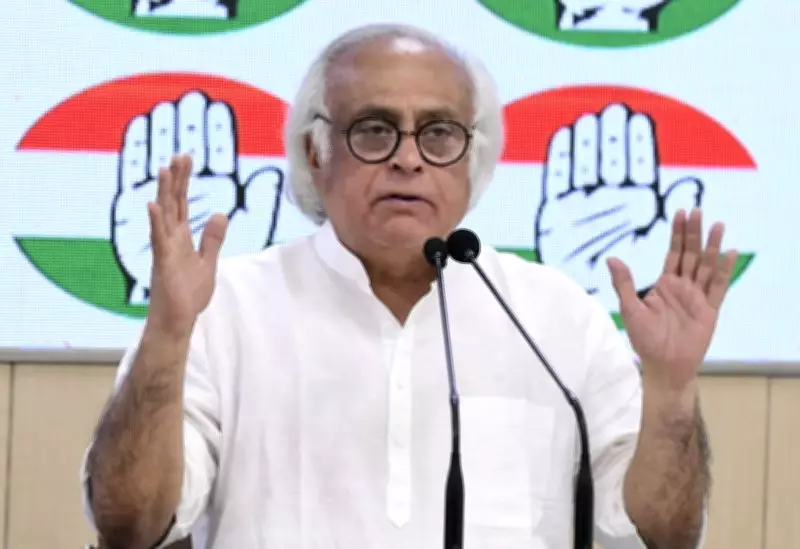
Congress general secretary Jairam Ramesh on Sunday launched a sharp attack on the central government, citing recent household expenditure data to highlight the growing burden of education costs on Indian families. He said the agony and anger of youth and their parents, which have fueled protests in recent weeks, stem from deeper issues of accessibility and affordability exposed by the data.
Ramesh pointed to a detailed analysis by the Centre for Monitoring Indian Economy (CMIE) based on household expenditure data from 2014/15 to 2025/26. The findings, he stated, are stark: education costs are rising substantially faster than household incomes. Households are allocating a considerably larger share of their income toward education, with private tuition emerging as one of the fastest-growing components of expenditure. School and college fees have recorded sustained growth throughout the last decade, consistently outpacing income growth.
Rising Costs Across Education Components
According to Ramesh, spending on books is rising even faster, reflecting higher textbook and reference material prices, greater expenditure on competitive exam preparations, and supplementary learning resources. He argued that these trends undermine the government's claims of making education more accessible.

“The Jantar Mantar and other protests in recent weeks have had proximate causes in an unfair and rigged exam system put in place by the deadly duo of Pradhan Mantri and (ex-) Mantri Pradhan. But the agony, anguish, and anger of youth and their parents have more fundamental causes of both accessibility and affordability revealed by the CMIE household expenditure data,” Ramesh said, quoting the analysis. He added that the youth and their parents are “crying out for remedial action NOW.”
Context of Education Minister's Resignation
Ramesh's remarks come a day after Education Minister Dharmendra Pradhan resigned amid mounting pressure over the NEET paper leak controversy. The Centre had conceded the principal demand of the Cockroach Janata Party (CJP)-led agitation after weeks of protests that spread from the national capital to several parts of the country. Pradhan announced his decision in a statement, saying the developments of the past 10 days had “saddened” him deeply and that the issue was “not a matter of personal prestige.”
The Congress leader linked the resignation to the broader crisis of education affordability and accessibility, suggesting that the government's failure to address these fundamental issues has led to widespread disillusionment among students and parents. He emphasized that the protests at Jantar Mantar and elsewhere were not merely about exam irregularities but reflected a deeper systemic failure.
The CMIE data, as cited by Ramesh, provides a quantitative basis for these claims. The analysis indicates that household spending on education has grown at a rate that significantly outpaces income growth, forcing families to cut back on other essentials. The rise of private tuition, in particular, highlights the inadequacy of formal schooling in preparing students for competitive exams, further exacerbating inequality.
Political Fallout and Demands for Action
Ramesh's attack is part of a broader political offensive by the Congress party, which has been demanding a thorough investigation into the NEET paper leak and other exam irregularities. The party has also called for measures to reduce the financial burden on students and ensure equitable access to quality education.
The Congress leader's statement underscores the party's strategy of using economic data to critique the government's performance on education and employment. By highlighting the mismatch between education costs and household incomes, Ramesh aims to shift the narrative from individual exam scandals to systemic failures in education policy.
As the political fallout continues, the government faces mounting pressure to address both the immediate concerns of exam integrity and the long-term challenges of making education affordable and accessible. The CMIE data serves as a stark reminder that for many Indian families, the dream of a better future through education is becoming increasingly elusive.