Congress Stages Protest in Delhi, Accuses Government of Diluting MGNREGA and Targeting the Poor
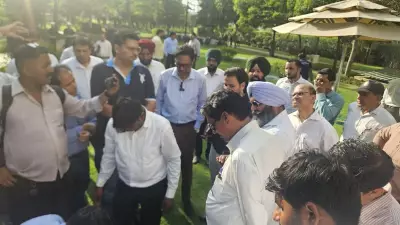
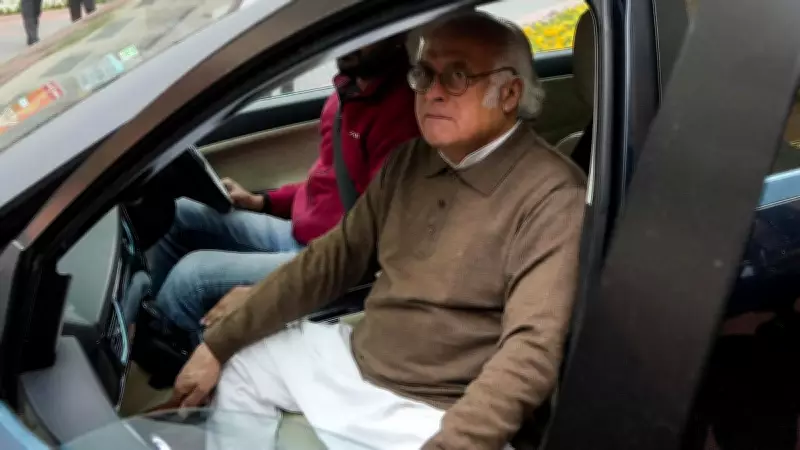
The Congress party organized a significant protest in Delhi, strongly criticizing the current government for what it describes as an attack on the poor through changes to the Mahatma Gandhi National Rural Employment Guarantee Act (MGNREGA). Congress general secretary Jairam Ramesh led the charge, asserting that the government is systematically taking away assured jobs that were once guaranteed under the scheme.
Jairam Ramesh Condemns VB-G RAM G Scheme as a Dilution of MGNREGA's Core Principles
During the protest, Jairam Ramesh specifically targeted the VB-G RAM G scheme, labeling it as a move that undermines the original spirit of MGNREGA, which was established during the UPA era. He argued that this new scheme represents a significant departure from the act's foundational goals of providing employment security and livelihood support to rural households.
Ramesh emphasized that MGNREGA was designed to offer a safety net for the most vulnerable sections of society, ensuring at least 100 days of wage employment per year to every rural household whose adult members volunteer to do unskilled manual work. He claimed that the VB-G RAM G scheme, in contrast, fails to uphold these commitments, effectively stripping away the assured job guarantees that have been crucial for poverty alleviation.

Protest Highlights Broader Political Tensions Over Social Welfare Policies
The demonstration in Delhi is not just a standalone event but reflects deeper political divisions regarding social welfare and economic policies in India. The Congress party has positioned itself as a defender of the poor, accusing the ruling government of neglecting the needs of marginalized communities in favor of other priorities.
Key points raised during the protest include:
- The alleged erosion of MGNREGA's effectiveness under the current administration.
- Concerns that the VB-G RAM G scheme may lead to reduced employment opportunities in rural areas.
- Calls for the government to revert to the original framework of MGNREGA to protect the interests of the poor.
This protest comes at a time when issues of unemployment and rural distress are prominent in national discourse, making it a focal point for opposition criticism. The Congress party's stance aims to rally support by highlighting what it sees as a betrayal of the poor, leveraging MGNREGA as a symbol of broader governance failures.
As the political debate intensifies, the future of MGNREGA and similar welfare schemes remains a contentious topic, with implications for millions of Indians relying on such programs for their livelihoods.