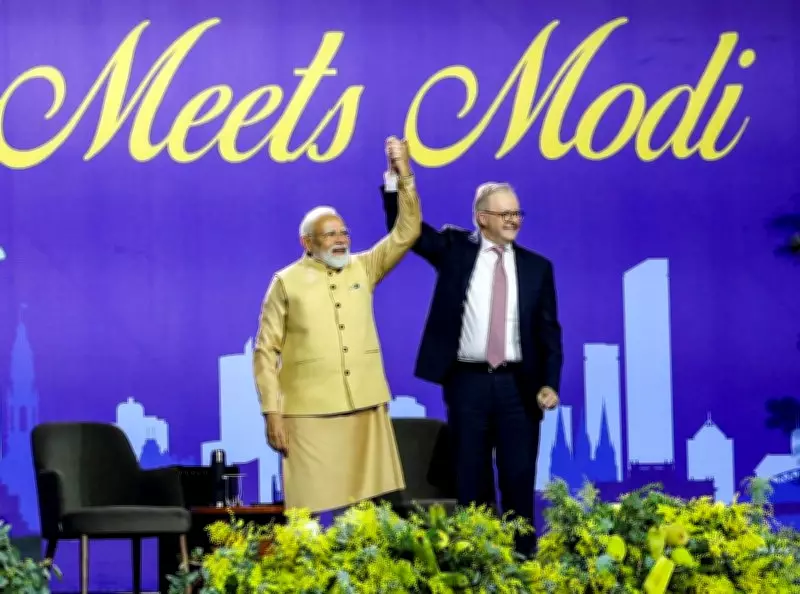
The Congress party on Thursday launched a sharp attack on Prime Minister Narendra Modi, dubbing him 'Award-Jeevi' and crediting the India-US Civil Nuclear Agreement signed under former Prime Minister Manmohan Singh for the landmark uranium supply deal between India and Australia. The agreement, signed during the third India-Australia Annual Summit in Melbourne, allows Australian uranium to be used in India's civilian nuclear programme.
Congress credits Manmohan-era nuclear deal
Congress general secretary Jairam Ramesh said Australia's decision to supply uranium to India became possible 'only because' of the India-US Nuclear Cooperation Agreement, which became law on October 8, 2008. He noted that negotiations for the agreement began after Dr Manmohan Singh's meeting with then US President George W Bush in July 2005, describing it as a turning point that ended India's decades-long nuclear isolation.
Ramesh alleged that the Bharatiya Janata Party (BJP) had opposed the agreement throughout its passage, both inside and outside Parliament, despite the strategic and energy benefits it promised. 'The Congress creates turning points while the BJP specialises in U-turning points,' he said.

India-Australia Strategic Partnership
The uranium supply agreement was a key outcome of the summit between PM Modi and Australian Prime Minister Anthony Albanese. The two leaders also unveiled an ambitious roadmap to deepen their Comprehensive Strategic Partnership, including fast-tracking negotiations on a Comprehensive Economic Cooperation Agreement (CECA) and expanding cooperation in critical minerals, clean energy, cyber technologies, and maritime security.
The India-US Civil Nuclear Agreement opened the door to civilian nuclear cooperation with several countries, laying the foundation for subsequent deals with nations like Australia, which has some of the world's largest uranium reserves. Australia had earlier restricted uranium exports to India because it is not a signatory to the Nuclear Non-Proliferation Treaty (NPT).
Political fallout
The Congress's criticism underscores the ongoing political rivalry over credit for major policy achievements. The BJP, which was in opposition during the UPA era, had vehemently opposed the nuclear deal, citing concerns over sovereignty and non-proliferation. However, the Modi government has since pursued civil nuclear agreements with multiple countries, including Australia.
The uranium supply deal is expected to boost India's energy security by providing a reliable source of fuel for its nuclear reactors. India currently operates 22 nuclear reactors with a total capacity of 6,780 MW, and plans to expand its nuclear power capacity significantly in the coming years.