The Congress party has targeted Union Minister Bhupender Yadav, demanding that ministers must accept moral responsibility for the dismissal of their aides. The party invoked former Prime Minister Lal Bahadur Shastri, who resigned as railway minister following a train mishap in Tamil Nadu, to underline the principle of ministerial accountability.
Congress MP Jairam Ramesh leads charge
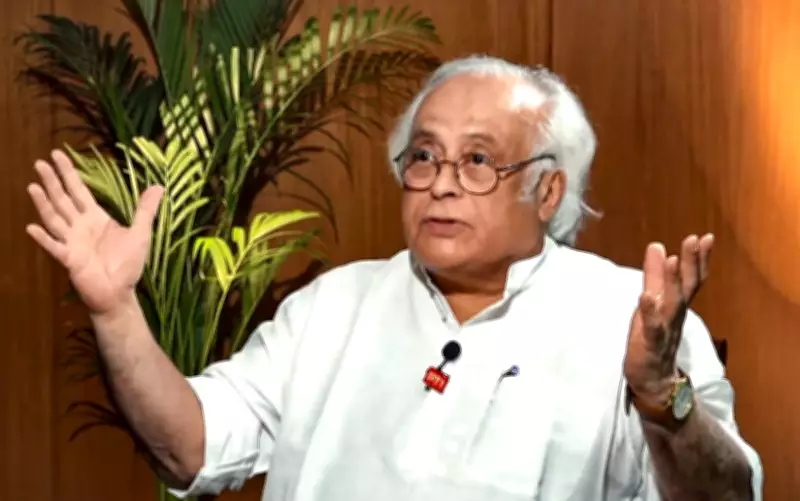
Congress MP Jairam Ramesh, in a statement, emphasized that the doctrine of moral responsibility is a cornerstone of parliamentary democracy. He cited Shastri's resignation in 1956 after a train accident at Ariyalur, Tamil Nadu, which killed 144 people. Shastri had then said, "I hold myself morally responsible for the accident and therefore resign." Ramesh argued that the current government should follow this precedent.
Background of the controversy
The controversy stems from the recent dismissal of two personal staff members of Union Minister Bhupender Yadav, who holds the portfolios of Environment, Forest and Climate Change, and Labour and Employment. The aides were reportedly removed over allegations of corruption and misconduct. However, the Congress has questioned why the minister himself has not taken responsibility for the actions of his office.

Congress demands accountability
Ramesh stated, "If the minister's own office is found to be involved in corrupt practices, the minister cannot escape by merely dismissing the staff. He must accept moral responsibility and step down." The Congress has also demanded a thorough investigation into the functioning of the minister's office.
Bhupender Yadav's response
Union Minister Bhupender Yadav has not yet publicly commented on the Congress's demand. However, sources close to him indicate that the dismissals were a result of internal vigilance and that the minister has taken strict action against the erring staff. The government maintains that the minister has acted transparently and in accordance with rules.
Political implications
The Congress's attack comes amid a series of controversies surrounding several Union ministers. The opposition has been consistently raising questions about the ethical standards of the government. The invocation of Lal Bahadur Shastri, known for his integrity, is a strategic move by the Congress to highlight what it perceives as a lack of accountability in the current administration.
Historical context of ministerial responsibility
The principle of ministerial responsibility in India is rooted in the British parliamentary system. It implies that ministers are answerable to Parliament for the actions of their departments. Resignation on moral grounds, though not legally mandated, is considered a hallmark of good governance. Shastri's resignation is often cited as a benchmark for ethical conduct in public life.