CPM's Solapur Unit Stages Protest in Kolhapur Against US-Israel Attack on Iran
In a significant demonstration of dissent, the Solapur unit of the Communist Party of India (Marxist), or CPM, organized a protest outside the district collectorate in Kolhapur. The protest was a direct response to the recent US-Israel attack on Iran, which has resulted in tragic casualties, including the deaths of school children in Iran's capital city, Tehran. This event underscores the escalating tensions in West Asia, with global implications.
Leaders and Participants Voice Outrage
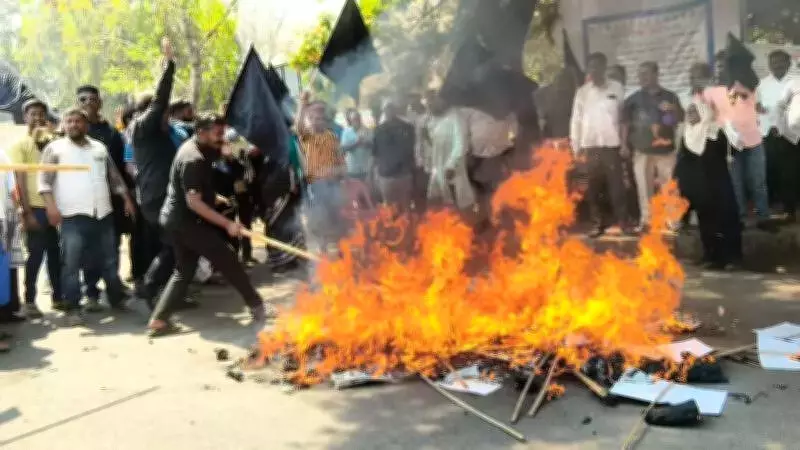
The protest was spearheaded by prominent CPM figures, including senior leader and former MLA Narsayya Adam, district secretary Yusuf Major, and state member Anil Wasam. Demonstrators donned black attire and raised black flags as symbols of mourning and protest. They chanted slogans vehemently opposing the United States and Israel, actions that highlighted their deep-seated anger over the conflict's impact on innocent lives.
In a dramatic display of condemnation, the protesters burned effigies of US President Donald Trump and Israeli Prime Minister Benjamin Netanyahu. This act served as a powerful visual statement against what they perceive as imperialist aggression in the region.

Condemnation of Child Deaths and Imperialism
During the protest, Narsayya Adam addressed the crowd, emphasizing the timing during the holy month of Ramzan. He stated, "While the holy month of Ramzan is going on, the imperialist forces attacked Iran. They killed 160 students at a school. The photos of the burial of the kids have brought grief and anger to every sane individual on this planet." Adam further criticized the US leadership, noting that two-thirds of US citizens view their president as a war monger, and stressed the CPM's duty to combat US imperialism through such protests.
Other leaders at the event echoed these sentiments, arguing that the attack was motivated by a desire to dominate the region and control Iran's oil resources. This perspective aligns with broader geopolitical analyses of the conflict's underlying economic drivers.
Attempted Disruption and Police Intervention
The protest faced a brief disruption when members of a right-wing group attempted to counter the demonstration by raising slogans in support of the US-Israel attack. However, local police swiftly intervened to prevent any potential scuffles, escorting the right-wing protesters away from the scene. This ensured that the CPM's protest remained peaceful and focused on its core message against violence and imperialism.
This incident in Kolhapur reflects the growing domestic reactions in India to international conflicts, particularly those involving significant humanitarian costs. As tensions in West Asia continue to simmer, with reports of missile strikes and naval disruptions affecting Indian interests, such protests highlight the interconnectedness of global events and local activism.