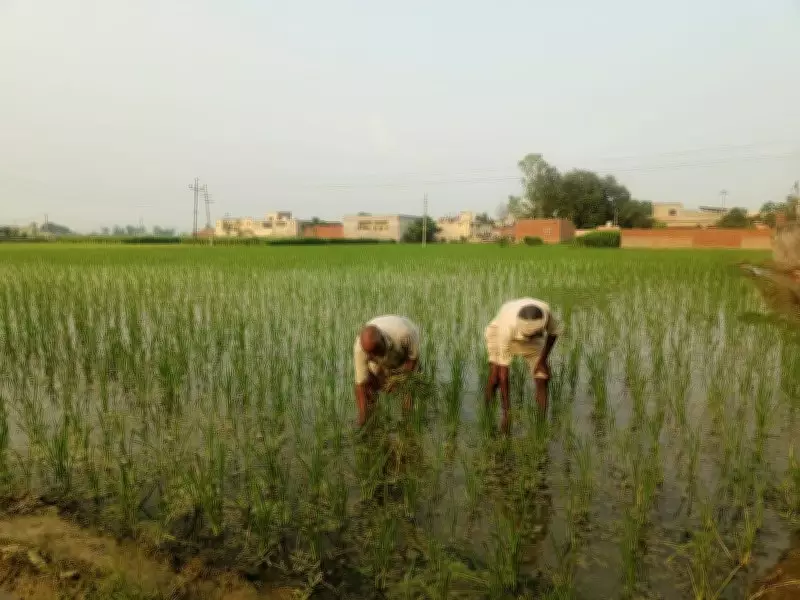
Only 55 to 60 percent of the targeted paddy area has been transplanted in Haryana so far this season, significantly behind the usual 70 percent completion rate for this period, according to an official from the Agriculture and Farmers Welfare Department. The delays are attributed to deficient rainfall in June and farmers' fears of an outbreak of the Southern Rice Black-streaked Dwarf Virus (SRBSDV), locally known as Fiji or dwarf virus.
Farmers Delay Sowing to Break Virus Cycle
Farmers have intentionally postponed transplantation by 10 to 15 days to reduce the risk of the dwarf virus, which severely affected early-transplanted paddy in the previous season. Although the official transplantation period began on June 15, many farmers waited until June 25 to start. Rajinder Kumar, a farmer, stated, "We have deliberately postponed transplantation by 10-15 days to break the virus cycle." He recalled that early-sown paddy varieties suffered significant losses last year due to the dwarf disease.
Rainfall Shortage Compounds Delays
Inadequate rainfall during June further hampered field preparations. Kewal, a farmer from Kaithal, explained that insufficient rain left many fields without the water needed for timely transplantation, forcing farmers to wait for better weather conditions. The Haryana government has set a target of bringing 15.60 lakh hectares under paddy cultivation in 2026. Karnal has the highest cultivation target at 1.85 lakh hectares, followed by Kaithal (1.65 lakh hectares), Jind (1.50 lakh hectares), Sirsa (1.45 lakh hectares), Fatehabad (1.35 lakh hectares), Kurukshetra (1.20 lakh hectares), and Hisar (1.05 lakh hectares). Other important paddy-growing districts include Yamunanagar, Ambala, and Sonepat, each with a target of 90,000 hectares.

Official Awareness Campaigns Underway
Dr. Wazir Singh, Deputy Director of Agriculture (DDA), acknowledged that the scarcity of rainfall had slowed transplantation across the region. He also confirmed that fear of the dwarf disease was another important reason behind the delay. "Agriculture Department has already conducted awareness campaigns to educate farmers about the virus and other crop diseases," he added. Dr. Singh advised farmers to use fertilizers judiciously and follow the recommendations of the Agriculture Department to maintain soil health and ensure better crop growth.
Outlook for Remaining Season
The India Meteorological Department (IMD) has predicted rainfall in the coming days across different parts of the state, which offers hope for pushing transplantation forward. Meanwhile, farmers continue to take precautions against disease outbreaks. The combination of delayed sowing and anticipated rains may help bridge the gap in transplantation coverage, but the impact of the virus and weather conditions remains a concern for the season's overall yield.