

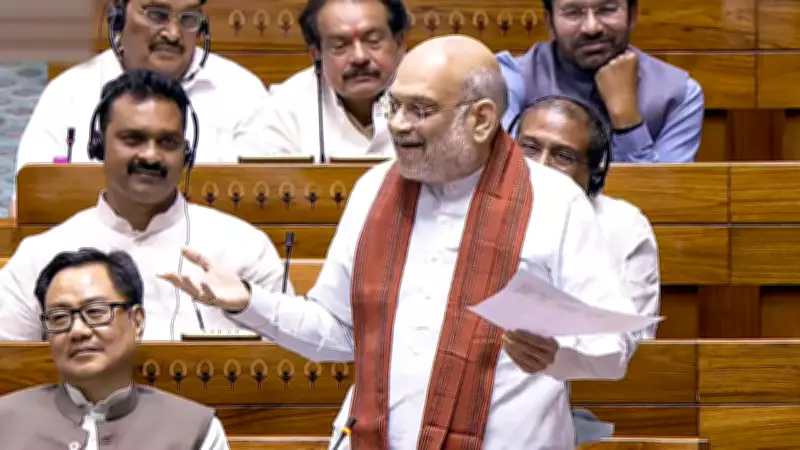
Delimitation Debate Intensifies in Lok Sabha Amid Women's Reservation Bill Introduction
The Lok Sabha witnessed a charged atmosphere during Parliament's special session, as the contentious issue of delimitation took center stage, sparking a heated debate over India's representational future. The discussion unfolded against the backdrop of the tabling of the Women's Reservation Bill, which promises a 33% quota for women, hailed by the government as a significant step toward enhancing representation in the world's largest democracy.
Government Assurance and Opposition Skepticism
Prime Minister Narendra Modi and Union Home Minister Amit Shah led the government's charge, addressing the House to allay fears, particularly from southern states, regarding the delimitation exercise. They emphatically stated that no injustice would be inflicted on the region, dismissing concerns about loss of representation as "completely false." Shah asserted that the exercise would not only increase the number of seats but also amplify influence, declaring, "The number of seats will go up and power will grow."
However, the Opposition struck a discordant note, with leaders like Priyanka Gandhi and Akhilesh Yadav sharply questioning the BJP's approach. They warned against a sweeping overhaul of Parliament's representational framework, highlighting potential imbalances and calling for more inclusive deliberations.

Southern States: Projected Seat Increases and Share Analysis
To quell mounting anxieties, Shah provided a detailed breakdown of how Lok Sabha representation for the five southern states would evolve post-delimitation. Overall, seats are projected to rise from 129 to 195, with the region's share increasing marginally from 23.76% to nearly 24%.
- Karnataka: Seats expected to increase from 28 to 42, though its share may dip slightly from 5.15% to 5.14%.
- Andhra Pradesh: Tally likely to rise from 25 to 38 seats, with share increasing by around 0.05 percentage points.
- Telangana: Strength projected to grow from 17 to 26 seats, pushing share up from 3.13% to 3.18%.
- Tamil Nadu: Seat count could surge from 39 to 59, elevating share from 7.18% to 7.23%.
- Kerala: MPs expected to increase from 20 to 30, with share remaining nearly unchanged, dipping marginally from 3.68% to 3.67%.
Protests and Political Tensions
Despite these assurances, tensions flared outside Parliament, with the DMK leading strong protests in Chennai. Demonstrators raised slogans and burned copies of the proposed bill, reflecting deep-seated apprehensions about the delimitation's impact on regional equity. This unrest underscores the broader political divide, as the government seeks to balance national representation reforms with regional sensitivities.
The special session thus highlighted a critical juncture in Indian politics, where the push for gender inclusivity through the Women's Reservation Bill intersects with complex geographical representation issues. As debates continue, the outcomes of these deliberations will shape the democratic landscape for years to come.






