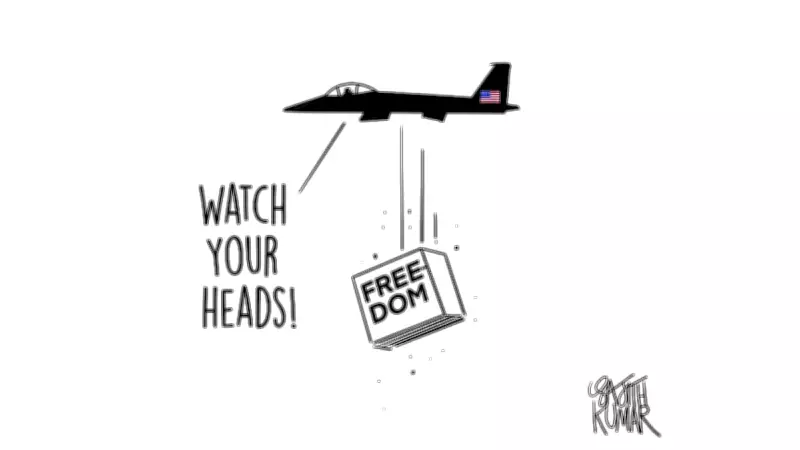
DH Toon Satirizes Political Rhetoric with 'Watch Your Heads' Cartoon
Deccan Herald's latest editorial cartoon, titled 'Watch Your Heads,' offers a sharp and humorous critique of contemporary political discourse in India. The cartoon, featured in the opinion section, uses visual satire to highlight the often contentious and aggressive nature of public debates, drawing attention to how political rhetoric can sometimes feel like a barrage of verbal projectiles.
Visual Commentary on Public Discourse
The cartoon depicts a scene where individuals are shown ducking or shielding themselves, symbolizing the need to protect against the sharp words and heated exchanges that characterize modern political conversations. Through clever imagery and minimal text, the artist effectively conveys the idea that political discussions have become so intense that they require caution, much like navigating a hazardous environment.
This piece serves as a reflection on the state of political communication, where debates often escalate into personal attacks and polarizing statements. By using satire, Deccan Herald encourages readers to step back and consider the impact of such discourse on public perception and democratic engagement.

Role of Editorial Cartoons in Media
Editorial cartoons have long been a powerful tool in journalism for commenting on social and political issues. They combine art and wit to distill complex topics into accessible and thought-provoking visuals. 'Watch Your Heads' exemplifies this tradition by addressing the tone of political rhetoric without delving into partisan specifics, making it relevant to a broad audience.
Such cartoons play a crucial role in fostering critical thinking and public awareness. They provide a lens through which readers can examine current events with a mix of humor and insight, often prompting reflection on broader societal trends.
Impact on Public Perception
The cartoon's message resonates in today's media landscape, where political debates are frequently amplified through digital platforms and news outlets. By satirizing the aggressive nature of these exchanges, it underscores the importance of civil discourse and the potential consequences of divisive language.
In an era marked by polarization, works like this cartoon remind us of the value of constructive dialogue and the need for media to hold power to account through creative means. Deccan Herald's contribution through this cartoon adds to the ongoing conversation about how we communicate and engage in political matters.