

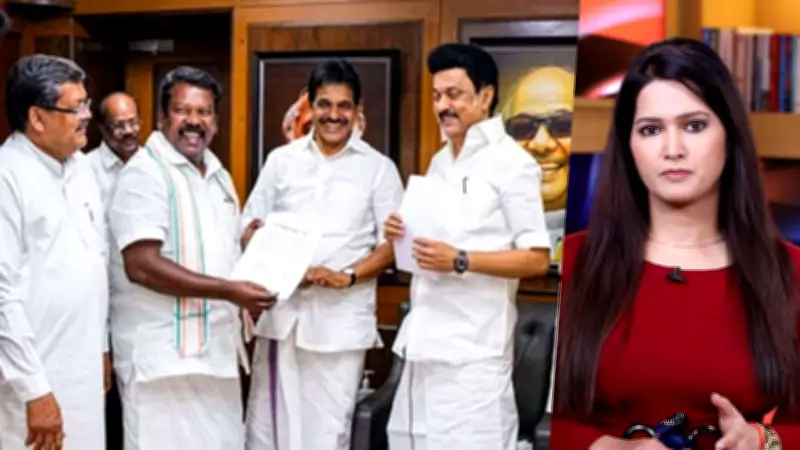
DMK-Congress Alliance Stalemate Intensifies Over Rajya Sabha Seat Allocation
The political landscape in Tamil Nadu is witnessing a deepening crisis as the long-standing alliance between the Dravida Munnetra Kazhagam (DMK) and the Indian National Congress faces a severe deadlock over seat-sharing arrangements. With the crucial 234-seat Assembly elections on the horizon, negotiations have reached a critical impasse, centered around a single Rajya Sabha seat that has become the epicenter of fierce bargaining.
Rajya Sabha Numbers Emerge as Pivotal Bargaining Chip
At the heart of the dispute lies the Congress party's urgent need to bolster its numbers in the Rajya Sabha, the Upper House of Parliament, to safeguard its national political standing and influence. The party is reportedly pushing for the allocation of two Rajya Sabha seats from Tamil Nadu, alongside a more substantial share of Assembly constituencies, as part of the pre-election pact.
However, the DMK, led by Chief Minister M.K. Stalin, is demonstrating a firm resolve to assert its dominance within the alliance framework. Sources indicate that the DMK leadership is unwilling to stretch beyond its current offer, viewing any significant concessions as a potential erosion of its authority and control over the coalition dynamics in the state.

Electoral Math Collides with Political Ego
This deadlock underscores the fragile and often volatile nature of coalition politics in India, where electoral calculations and political pride frequently collide at decisive moments. The ongoing negotiations highlight the intricate balance of power, with both parties meticulously weighing their strategic interests against the backdrop of an impending electoral battle.
The Congress is leveraging its national presence and the symbolic importance of Rajya Sabha representation to press for a better deal, arguing that enhanced numbers in the Upper House are essential for effective governance and opposition strategies at the federal level.
Conversely, the DMK is emphasizing its regional stronghold and the necessity of maintaining a cohesive front to secure a victory in the state elections. The party's stance reflects a broader trend in Indian politics where regional players are increasingly assertive in alliance negotiations, prioritizing state-level gains over national party agendas.
Implications for Tamil Nadu's Political Future
As talks continue behind closed doors, political analysts are closely monitoring the situation, noting that the outcome could have far-reaching implications for Tamil Nadu's governance and the stability of the DMK-Congress partnership. The deadlock not only threatens to delay campaign preparations but also raises questions about the alliance's ability to present a united front against opposition forces.
The resolution of this standoff will likely set a precedent for future coalition negotiations in the state, influencing how regional and national parties navigate the complex interplay of local aspirations and broader political objectives. With the election clock ticking, both sides are under mounting pressure to find a middle ground that preserves the alliance while addressing their respective core demands.






