

BRICS Security Meeting Addresses Terrorism and Cyber Threats
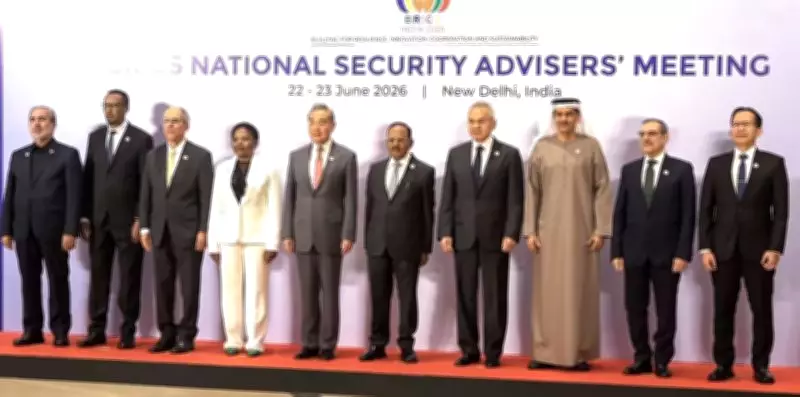
National Security Advisers and heads of delegation from BRICS countries convened in New Delhi on Tuesday, June 23, 2026, calling for deeper cooperation against terrorism and cyber threats. The 16th BRICS National Security Advisers’ Meeting, held under India’s chairship, identified energy security, food security, supply chain disruptions, and climate-induced instability as major non-traditional challenges confronting the world.
Key Outcomes and Deliberations
According to an official statement, participants deliberated on challenges relating to energy and food security, supply chain resilience, cyber security, climate-induced instability, and the use of emerging technologies by terrorist networks. The security chiefs reviewed the outcomes of the BRICS Joint Working Group meetings on counter-terrorism held in May and on security in the use of Information and Communication Technologies (ICTs) earlier this month. The leaders expressed support for expanding cooperation among BRICS members through capacity building, enhanced information sharing, and greater coordination among law-enforcement agencies to collectively tackle terrorism and cyber risks. They reaffirmed their commitment to combating terrorism “in all its forms and manifestations”, including countering the use of new technologies by terrorist groups.
Theme and High-Level Meetings
The meeting, held under the theme “Building for Resilience, Innovation, Cooperation and Sustainability”, concluded with the National Security Advisers and heads of delegation calling on Prime Minister Narendra Modi and expressing full support for India’s BRICS Chairship in 2026. On the sidelines of the two-day gathering, National Security Adviser Ajit Doval held a series of bilateral meetings with counterparts from China, Iran, Brazil, Ethiopia, and South Africa.

Doval-Wang Yi Meeting on Bilateral Ties
Most notably, Doval met Chinese Foreign Minister Wang Yi, with the two sides reviewing recent developments in bilateral relations and noting progress towards the “gradual normalisation” of ties. According to the Ministry of External Affairs, Doval underlined that stable, predictable, and constructive bilateral relations were essential for building trust and better understanding between the two countries. The discussions were described as “positive”, “constructive”, and forward-looking.
Official Briefing and Broader Context
Briefing reporters earlier in the day, External Affairs Ministry spokesperson Randhir Jaiswal said the BRICS security dialogue had focused on how member countries could collectively respond to emerging national security challenges and the role of new technologies in shaping future threats. “Discussions also covered the evolving nature of national security challenges and the role of new technologies in emerging security threats,” Jaiswal said. The New Delhi meeting forms part of India’s broader effort to strengthen cooperation among BRICS nations on security issues amid an increasingly complex global landscape.






