

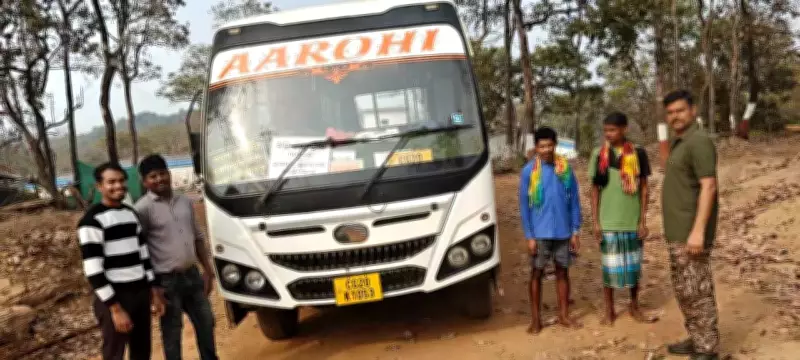
Historic Bus Service Connects Remote Pidiya Region in Chhattisgarh's Bastar
In a landmark development for the region, a regular bus service has commenced operations to the remote Pidiya area in Chhattisgarh's insurgency-affected Bijapur district of Bastar. This marks the first time since India's independence that such connectivity has been established to this long-isolated cluster of approximately 15 villages.
Security Operations Pave the Way for Connectivity
The breakthrough was made possible following the establishment of a forward operating base (FOB) by the 199th battalion of the Central Reserve Police Force at Pidiya. Located nearly 50–60 kilometers from the district headquarters, this area had remained largely inaccessible for decades due to Maoist influence and significant security challenges along the roads.
Security officials emphasized that sustained anti-Maoist operations combined with the strategic positioning of the CRPF camp gradually ensured operational dominance in the region. This security presence provided the essential cover necessary to develop and secure road connectivity, transforming what was once considered among the most inaccessible Maoist strongholds in south Bastar.

Transforming Daily Life for Remote Communities
For generations, residents of the Pidiya region had minimal access to regular transportation. Travel to Bijapur town typically involved arduous treks through dense forested terrain, creating significant barriers to essential services and opportunities.
With improved security along the route, the new bus service now operates from Bijapur to Pidiya, passing through several villages including:
- Gangaloor
- Pusnar
- Hiroli
- Kawadgaon
- Muthvendi
CRPF officers expect this service to dramatically ease daily travel for villagers who were previously completely cut off from the district headquarters and its resources.
Educational and Healthcare Access Expanded
Local residents have highlighted that the new connectivity will particularly benefit students from remote tribal villages, with special emphasis on girls seeking higher education opportunities in Bijapur town. The ability to travel safely and regularly to educational institutions represents a transformative opportunity for youth in the region.
Beyond education, access to multiple essential services is expected to improve significantly:
- Healthcare facilities previously difficult to reach
- Markets for economic activities
- Administrative services for documentation and governance
- Other essential facilities that require regular travel
The development symbolizes growing state presence in an area that had long remained beyond the reach of conventional infrastructure and services. This connectivity initiative represents not just transportation improvement but a fundamental shift in the relationship between remote communities and government services in one of India's most challenging regions.






