Outgoing Chief of the Army Staff General Upendra Dwivedi stated on Tuesday that future wars will be more joint, integrated, and theatre-oriented, underscoring the need for the armed forces to "see together, take decisions together, and take actions together." He made these remarks during his farewell ceremony in New Delhi.
Farewell Ceremony and Guard of Honour
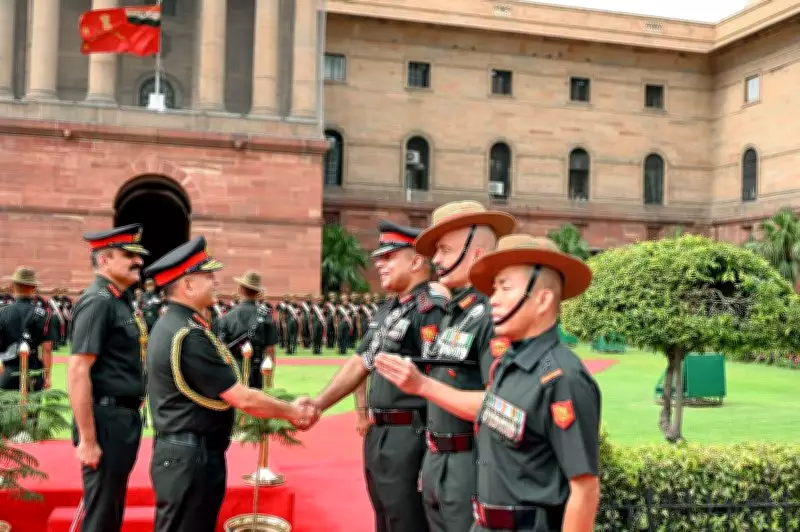
General Dwivedi, who retires after over 40 years of service, was accorded a guard of honour on the lawns of the South Block. Reflecting on his tenure, he said, "Today, as I complete my tenure as the Chief of the Army Staff, I feel a sense of deep gratitude, pride, and satisfaction." He took over as the 30th Chief of the Army Staff in June 2024.
"The journey from Sainik School till now has been incredible. To serve the Indian Army for over four decades has been the greatest fortune in my life," he added. Prior to the ceremony, he visited the National War Memorial to lay a wreath in honour of the country's fallen soldiers.

Operational Readiness and Border Vigilance
General Dwivedi highlighted that over the past two years, the Indian Army has maintained operational readiness in a progressive manner on all fronts. On the northern border, under Operation Snow Leopard, "our deployment is firm and vigilant," he said. On the western border, the Army has performed its duty with "complete seriousness and readiness," citing Operation Sindoor as a "burning example."
During Operation Sindoor in May 2025—launched in response to the Pahalgam terror attack—all three services worked with jointness and integration. "The coordination among the three services got strengthened. The Army, the Navy, and the Indian Air Force worked together with shared thinking and integration," he noted.
Vision for Future Warfare
Emphasizing the evolving nature of conflict, General Dwivedi said, "In future, wars will be more joint, integrated, and theatre-oriented. So, our direction is clear—to see together, make decisions together, and take actions together." He stressed that the Indian Army draws its strength not from individuals but from its soldiers, commanders, veterans, families, and the faith of citizens.
An alumnus of Sainik School in Rewa, Madhya Pradesh, General Dwivedi was commissioned into the Jammu and Kashmir Rifles in 1984. He has served in command and staff roles across Northern, Eastern, and Western theatres in diverse operational environments.
Role of Soldiers and Global Contributions
The outgoing Army chief asserted that for any commander, "his strengths are his soldiers, whose commitment, bravery, and discipline are the identity of the Indian Army." He highlighted the role of soldiers in counter-terrorism operations, UN peacekeeping missions, and humanitarian assistance and disaster relief efforts—from the dense jungles of Congo to earthquake-hit Venezuela.
"Our unwavering soldiers remain steadfast in mountains, deserts, glaciers, jungles, and inhospitable border areas in defence of the nation," he concluded.