

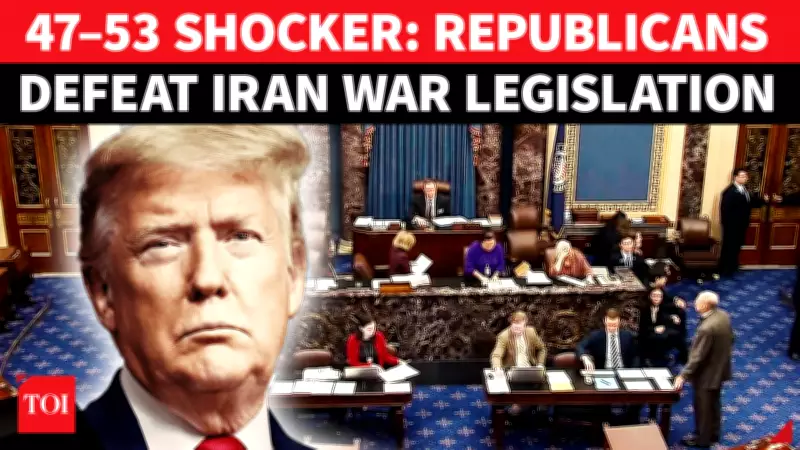
Senate Showdown: GOP Blocks Iran War Powers Resolution in 47-53 Vote
In a tense and pivotal confrontation on Capitol Hill, Republicans successfully torpedoed a war powers resolution designed to restrict President Donald Trump's ongoing military campaign against Iran. The vote, which concluded with a 47-53 tally, represents a significant early endorsement from the Senate for a conflict that is rapidly escalating across the Middle East, all while the United States lacks a clear exit strategy.
Defining Stand on Presidential Authority and Congressional Oversight
Lawmakers were compelled to take a definitive position on the critical issues of presidential war authority and congressional oversight during this high-stakes session. The chamber was filled with Democrats in a rare display of solemnity as the vote proceeded, highlighting the profound implications for American troops deployed in the region, the stability of the Middle East, and the future trajectory of U.S. foreign policy.
The outcome underscores a deepening political divide over the administration's approach to Iran, with Republicans rallying behind Trump's aggressive stance. This vote not only shakes the foundations of Capitol Hill but also sets a precedent for how Congress may handle similar conflicts in the future, raising questions about the balance of power between the executive and legislative branches.

Broader Implications for Regional and Global Stability
The defeat of the resolution comes amid a backdrop of heightened tensions and military engagements in the Middle East. With no apparent strategy for de-escalation, the vote signals a potential prolongation of hostilities, which could have far-reaching consequences for international relations and global security. The rare gravity displayed by Democrats during the proceedings reflects the widespread concern over the risks involved, including the safety of U.S. forces and the potential for broader regional instability.
This Senate battle marks a crucial moment in the ongoing debate over war powers, as it highlights the challenges of congressional oversight in an era of rapid military action. The 47-53 vote not only represents a win for Trump but also sets the stage for future legislative battles over foreign policy and military intervention, with both parties poised to continue clashing over these fundamental issues.






