Kolkata: Non-industrialisation, joblessness, and unchecked corruption overshadowed cultural and culinary concerns in the recent West Bengal election, as the Trinamool Congress (TMC) failed to retain its stronghold. The party, led by Chief Minister Mamata Banerjee, had framed the contest as a battle for Bengali identity against a hostile central government. Campaign tactics included highlighting attacks on Bengali migrant workers in other states, alleged BJP dictates on non-vegetarian food, and the Centre's apathy in releasing funds.
Trinamool's Identity Narrative
The TMC's slogan, 'Jato karo Hamla, Ebar jitbe Bangla' (However much you attack, this time Bangla will win), turned politics into a form of Bengali resistance, suggesting identity was under assault. The BJP quickly responded with cultural gestures: Prime Minister Narendra Modi ate 'jhalmuri' in Jhargram, raised the fish debate, and candidate Sharadwat Mukhopadhyay walked around with a fish. Union Home Minister Amit Shah declared a 'son of soil' would be the next BJP chief minister, reinforcing the party's local credentials.
Shifting Ground
In the last Lok Sabha election, the TMC had already lost leads in over 60% of wards across 125 municipal bodies, including its strongholds in south Kolkata. This time, four converging grievances eclipsed the identity narrative: the RG Kar tragedy, which evolved from a law-and-order issue into an indictment of administrative impunity; structural unemployment; decaying infrastructure; and the unresolved teachers' recruitment dispute.

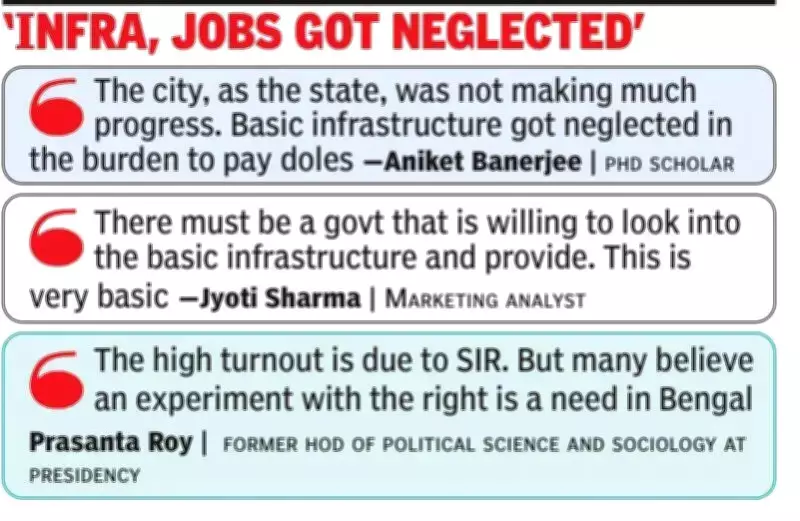
"The city and the state were not making much progress. They said 'khela hobe' and now the game is over," said PhD scholar Aniket Banerjee, who is forced to seek employment outside the state. Former head of political science and sociology at Presidency University, Prasanta Roy, noted that anti-incumbency played a role. "The high turnout is due to SIR. But many believe an experiment with the right is a need in Bengal."
Supurna Banerjee, assistant professor of sociology at the Institute of Development Studies, observed that "opportunism among the Bengali middle class has become fundamental. They have directed their anger at not getting dearness allowance or jobs against people who are more vulnerable than them."
Follow the latest election results 2026, live updates, winner lists, constituency-wise results, party-wise trends, and full coverage for Tamil Nadu, West Bengal, Kerala, Assam, and Puducherry on Times of India.