

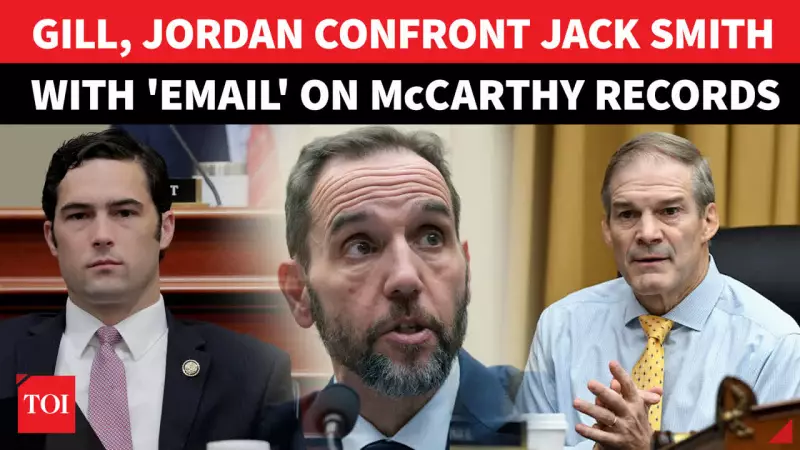
Jack Smith Faces Intense Grilling in House Hearing Over Trump Investigation
In a dramatic and highly charged session before the House Judiciary Committee, former special counsel Jack Smith spent hours defending the scope and methodology of his investigation into former President Donald Trump. The hearing, marked by sharp exchanges and political tension, saw Republicans led by Representative Jim Jordan launching repeated accusations against Smith, alleging improper surveillance of lawmakers.
Republicans Accuse Smith of 'Spying' on Lawmakers
During the lengthy proceedings, GOP members focused intensely on Smith's use of phone tolling records as part of his investigative work. Representative Jordan and his colleagues characterized these actions as "spying" on elected officials, suggesting potential overreach and political motivation behind the probe into the former president.
Smith responded forcefully to these allegations, categorically rejecting claims that his investigation represented any form of political weaponization. The former special counsel maintained that his team operated within established legal boundaries and followed standard investigative protocols throughout their examination of matters related to Donald Trump.

Defending Standard Investigative Tools
In his detailed defense, Smith explained that phone tolling records represent routine investigative tools commonly employed in federal inquiries. He clarified that these records simply document call times and telephone numbers involved in communications, emphasizing they do not constitute wiretaps or involve interception of actual conversation content.
The former prosecutor stressed that such records provide investigators with basic communication patterns without revealing the substance of discussions, drawing a clear distinction between this standard practice and more intrusive surveillance methods that would require higher legal thresholds.
Broader Context of Political Investigations
The hearing unfolded against a backdrop of heightened political tensions surrounding investigations into former President Trump. Smith's appearance before the committee represents just one chapter in the ongoing political and legal battles that have characterized the post-presidency period for Donald Trump.
As both parties prepare for upcoming electoral contests, such hearings have taken on increased significance, with each side seeking to frame the narrative around investigations into the former president and his administration.
Implications for Future Investigations
The intense questioning and Smith's detailed defense highlight the continuing debate over appropriate boundaries for investigations involving political figures. Legal experts note that such confrontations between congressional oversight committees and special counsels have become increasingly common in recent years, reflecting broader tensions between different branches of government.
The hearing's focus on investigative methods, particularly the use of communication records, may influence how future special counsels approach similar inquiries and how Congress exercises its oversight authority regarding such investigations.






