

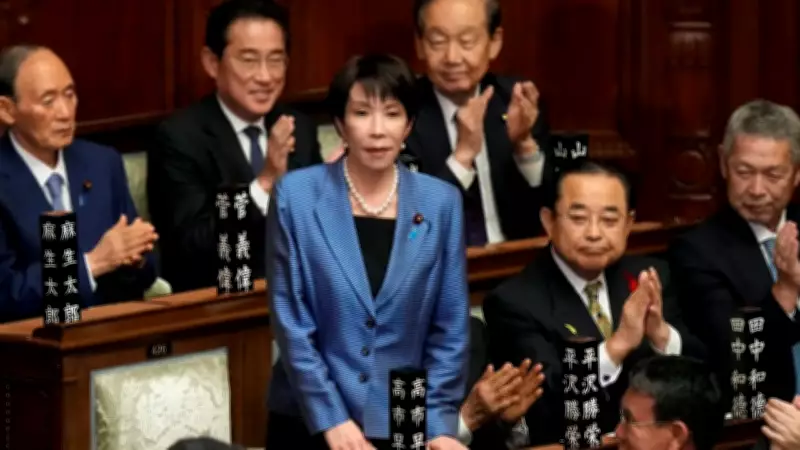
Japan's Ruling Liberal Democratic Party Poised for Decisive Victory in Snap Elections
According to exit polls and media projections, Japan's ruling Liberal Democratic Party (LDP), under the leadership of Prime Minister Sanae Takaichi, is heading toward a decisive victory in Sunday's snap lower house elections. This outcome marks a significant political shift for the nation.
Projected Seat Gains and Coalition Strength
Public broadcaster NHK has projected that the LDP could secure between 274 and 328 seats in the 465-member lower house. This represents a substantial increase from its pre-election tally of 198 seats, as reported by the news agency AFP. When combined with its coalition partner, the Japan Innovation Party (JIP), the ruling bloc is expected to win between 302 and 366 seats.
Crossing the 310-seat threshold would grant the coalition a two-thirds supermajority for the first time since 2017. This powerful majority would enable the government to pass legislation without requiring opposition support, potentially accelerating policy implementation.

A Turnaround for the LDP Under Takaichi's Leadership
The projected victory signifies a sharp turnaround for the LDP, which had faced electoral setbacks in recent years due to rising prices and corruption concerns. Under former Prime Minister Shigeru Ishiba, the coalition lost its upper house majority last year and its grip on the lower house in 2024.
Takaichi, who became Japan's first female prime minister in October, called the snap election after just three months in office to capitalize on her rising popularity. She has attracted younger voters with her energetic and unconventional style, defying skepticism within her own party, according to AFP reports.
Voter Concerns: Economy and Inflation Remain Key Issues
Despite the projected win, voters continue to express anxiety about economic conditions. Inflation and stagnant wages were prominent concerns on polling day.
"With prices rising like this, what matters most to me is what policies they'll adopt to deal with inflation," said Tokyo voter Chika Sakamoto, as quoted by AFP. She added that household incomes were not keeping pace with rising costs.
Takaichi has rolled out a $135-billion stimulus package and promised to suspend consumption tax on food. However, concerns persist about Japan's public finances. The country's debt exceeds twice the size of its economy, and bond yields have reached record highs in recent weeks.
Regional Tensions and Foreign Policy Implications
The election result could complicate Japan's relations with China. Takaichi, viewed as a China hawk, recently suggested that Japan might intervene militarily if Beijing used force against Taiwan. This statement triggered a strong response from China.
Beijing summoned Japan's ambassador, warned its citizens against traveling to Japan, and conducted joint air drills with Russia. The issue has raised concerns about regional stability, even as US President Donald Trump publicly praised Takaichi as a "strong, powerful, and wise Leader."
Potential Policy Directions with a Strong Mandate
According to the Associated Press, a strong majority would allow Takaichi to advance her conservative agenda. This could include:
- Boosting defence spending
- Revising security policy
- Lifting restrictions on weapons exports
- Tightening rules on foreigners
Experts caution that while the win strengthens her position, unresolved questions remain about funding military expansion and managing diplomatic tensions. One analyst, cited by AFP, suggested that the best outcome would be for Takaichi to "take a deep breath" and work on stabilizing relations with China before the next electoral test in 2028.






