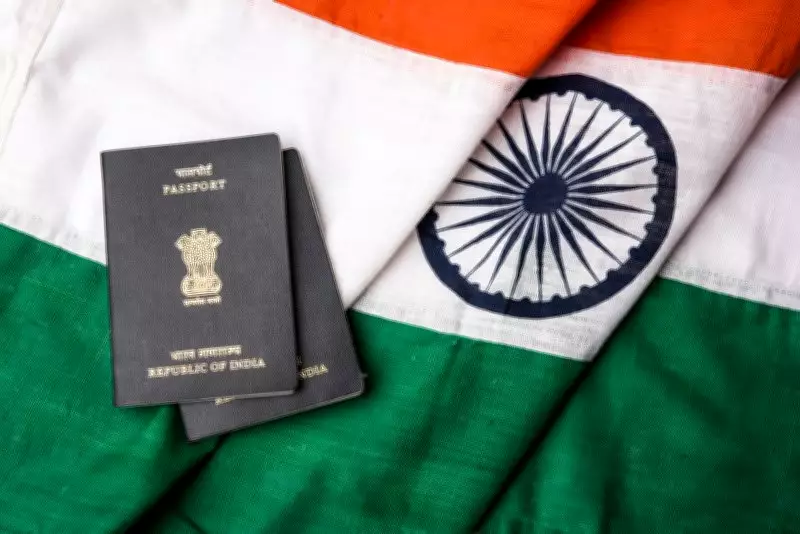
Passport Row Sparks Anxiety Over Citizenship Proof
On Passport Seva Divas (June 24), the Ministry of External Affairs declared that a passport is a travel document, not a document of citizenship. While legally accurate under the Passports Act, this statement unsettled many Indians, particularly in Punjab, where over one in five residents holds a passport. For most, the passport is the most authoritative proof of belonging, issued only after the State verifies citizenship. The announcement raised a troubling question: if the passport does not prove citizenship, what does?
Punjab's Dependence on Passports as Lifelines
In Punjab, passports are not mere documents but lifelines connecting families abroad. Almost every family has a relative in Canada, the US, the UK, Australia, or the Gulf. The passport ties the village to Brampton, Southall, or Surrey. Haryana shares a similar pattern, with the northwestern plains having sent youth overseas for over a century since the Ghadar movement. The MEA's statement thus caused particular unease in these regions.
Historical Meaning of Passport as Sovereign Blessing
The word "passport" originates from passing through a port or gate, historically a sovereign's letter of safe conduct for a traveller to leave and return. A State blesses only its own citizens, not strangers. India does not allow dual citizenship, so keeping an Indian passport means refusing others. For many, the passport is a statement of identity, not just travel authorization.

Demonetisation Effect on Passports
The timing of the MEA statement was seen as cruel, creating anxiety similar to the 2016 demonetisation. Then, citizens suddenly doubted the validity of currency notes. Now, a similar doubt was cast on passports, making people question a document previously taken for granted as proof of belonging.
Electoral Rolls as the Real Kill Switch
The real threat to citizenship lies not in passport offices but in electoral rolls. In West Bengal, the Special Intensive Revision (SIR) struck off 63 lakh names. The new government ordered ration cards of deleted voters to be deactivated. Deleting a name from the voter list effectively unplugs the citizen from the State, acting as a kill switch for citizenship.
Impact on Punjab Ahead of 2027 Elections
Punjab faces assembly elections in early 2027, and house-to-house enumeration for SIR has begun. The revision matches names across old and new rolls, flagging logical discrepancies. Sikh names written in English, Punjabi, and back to English by different clerks can produce variations: Amreek Singh vs Amrik Singh, Jasvinder vs Jusvinder, Gurmeet vs Gurmit. These are not fraud but ordinary transliteration friction. To a matching machine, they appear as discrepancies, forcing citizens to prove their own identity.
For a Punjabi household, the sequence is devastating: first the vote is lost, then the ration card, then the passport renewal fails because police verification relies on electoral rolls. The thread to Brampton or California is cut not by a court finding someone a foreigner, but by a misplaced vowel. A proud border state that has sent soldiers to fight wars and children to build lives abroad is forced to prove its citizenship just to keep passports that hold families together.
Supreme Court's Faltering Response
The Supreme Court was petitioned in Association for Democratic Reforms v. Election Commission of India, decided this year, upholding the SIR in Bihar where nearly 47 lakh names were struck off. The Court deemed the exercise proportionate and lawful, holding that a place on the rolls creates only a rebuttable presumption of citizenship, and asking citizens to prove themselves afresh does not offend the Constitution.
This tacitly divides citizens into two classes: secure voter-citizens and doubtful non-voter inhabitants subject to administrative action. Article 14 promises equal protection, but the Court allowed the State to create two classes, failing its duty as a sentinel on the qui vive.

Comparison to ADM Jabalpur and Emergency
Fifty years ago, in ADM Jabalpur, the Court held that even the right to life could be suspended during Emergency. That judgment was never lived down, and Justice Chandrachud the younger specifically overruled his father's concurrence. Now, the Bihar judgment has stripped the right to vote, ration card, and passport in ordinary times without any Emergency. In ADM Jabalpur, the judiciary had the excuse of Emergency; this judgment has none.
Hope in Pending Bengal Challenge
The challenge to the SIR in West Bengal is still pending before the Court. There is hope that when the Court addresses Bengal, it will correct its Bihar error. A citizen long on the rolls should not be struck off based on proof demanded from them, but only on proof brought against them. The vote, ration card, and passport are inalienable rights, not favours to be switched off by a clerk or electoral officer.
India still holds an open question: does it have an occasionally fallible Supreme Court or one that repeatedly fails its citizens? When the Bengal judgment comes, Punjab will be listening.