LPG Cylinder Price Hike Ignites Heated Political Debate on Inflation
A significant increase in LPG cylinder prices has set off a fierce political controversy across India, with opposition leaders vehemently criticizing the central government for exacerbating inflationary pressures on ordinary households. The government announced a price hike of Rs 60 for domestic LPG cylinders and Rs 115 for commercial cylinders, a move that has drawn immediate and sharp reactions from various political quarters.
Opposition Parties Launch Scathing Attacks
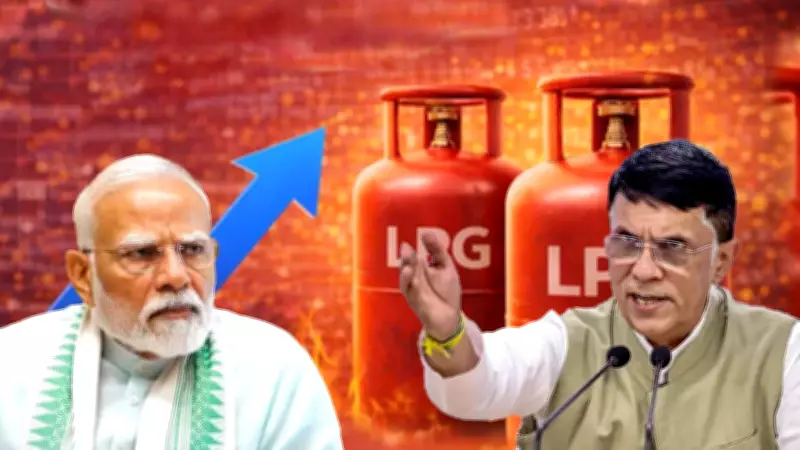
The Congress party has been particularly vocal, describing the price increase as another severe blow to common families struggling with rising costs. In a strongly worded statement, Congress labeled Prime Minister Narendra Modi as "Inflation Man," accusing his administration of failing to control price rises that affect daily essentials.
Senior Congress leader Pawan Khera directly challenged Petroleum Minister Hardeep Singh Puri's recent assurances about fuel affordability. Khera questioned how the government could claim fuel supplies remain accessible and reasonably priced for consumers while implementing such substantial price hikes, especially amid ongoing geopolitical tensions in West Asia that could potentially disrupt supply chains.

Regional Leaders Join the Criticism
West Bengal Chief Minister Mamata Banerjee added her voice to the growing chorus of criticism, warning that escalating LPG costs would disproportionately harm ordinary families already grappling with financial constraints. Her comments reflect broader concerns among opposition figures about the cumulative impact of rising fuel prices on household budgets across different socioeconomic groups.
Government Defends Position on Fuel Security
Meanwhile, government sources have defended the decision by emphasizing India's robust fuel security infrastructure. Officials point to adequate fuel stocks maintained across the country and diversified supply routes that reduce dependency on any single source. The government highlights strategic petroleum reserves capable of handling short-term supply disruptions, even as geopolitical tensions persist in regions like West Asia, particularly concerning the ongoing US-Iran conflict.
The administration argues that these measures ensure long-term energy security for India's 1.4 billion citizens, though opposition parties remain skeptical about how price increases align with claims of affordability and stability for consumers facing daily economic pressures.