West Bengal Political Clash Intensifies as Mamata Banerjee Counters BJP Criticism
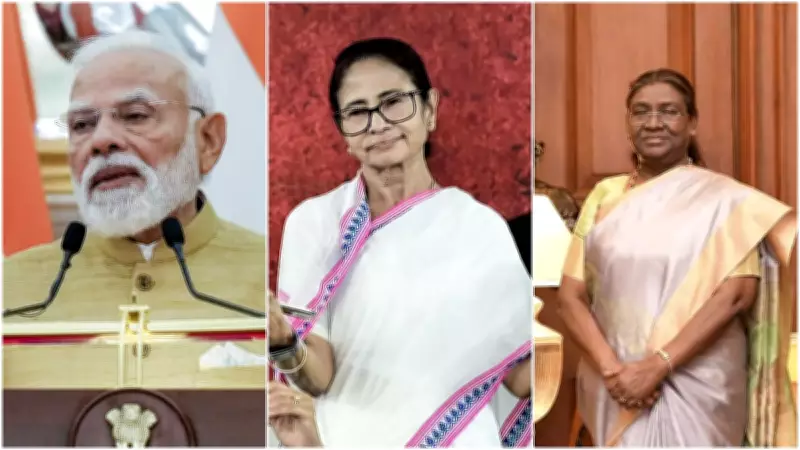
In a sharp escalation of political tensions, West Bengal Chief Minister Mamata Banerjee has launched a counterattack against the Bharatiya Janata Party (BJP) by circulating a photograph that shows Prime Minister Narendra Modi seated while President Droupadi Murmu stands beside him. This move comes as a direct response to sustained criticism from the BJP leadership regarding the alleged disrespect shown to the President during her recent visit to West Bengal.
Background of the Controversy
Prime Minister Narendra Modi, for the second consecutive day, has vehemently criticized the Trinamool Congress (TMC) government led by Mamata Banerjee. The BJP alleges that the TMC administration in West Bengal deliberately insulted President Droupadi Murmu during her official visit to the state. Modi's attacks have focused on what the BJP describes as a lack of proper protocol and respect toward the head of state, accusing the TMC of undermining constitutional norms.
The controversy stems from incidents during President Murmu's tour, where the BJP claims she was not accorded the customary honors and courtesies expected for a visiting President. This has sparked a heated debate in Indian political circles, with the BJP leveraging the issue to target the TMC government ahead of upcoming elections.

Mamata Banerjee's Strategic Response
In a bold and calculated move, Chief Minister Mamata Banerjee has countered these allegations by releasing a photograph that depicts a different scenario. The image shows Prime Minister Narendra Modi comfortably seated while President Droupadi Murmu is standing nearby. This visual evidence is intended to challenge the BJP's narrative and shift the focus onto the Prime Minister's own conduct.
By highlighting this moment, Banerjee aims to question the consistency of the BJP's accusations and portray the party as hypocritical. Her strategy involves turning the tables on the BJP, suggesting that if protocol breaches are an issue, then the Prime Minister's actions should also be scrutinized. This tactic is part of a broader political maneuver to defend her government's record and rally support among voters in West Bengal.
Political Implications and Reactions
The exchange has significant implications for Indian politics, particularly in the volatile state of West Bengal. The BJP, under Modi's leadership, has been aggressively expanding its presence in the region, often clashing with the dominant TMC. This latest controversy adds fuel to an already fiery political landscape, with both parties using it to mobilize their bases and attract undecided voters.
Reactions from political analysts suggest that Banerjee's counterattack could resonate with segments of the electorate who view the BJP's criticism as politically motivated. However, the BJP is likely to continue its offensive, framing the issue as one of national pride and constitutional propriety. The conflict underscores the deep-seated rivalries and strategic battles that define contemporary Indian politics.
Broader Context of Protocol and Politics
This incident raises broader questions about the use of protocol and ceremonial norms in political warfare. In India, such matters are often weaponized by parties to score points against opponents, especially in high-stakes electoral environments. The focus on President Murmu's visit and the subsequent photo controversy highlights how symbolic gestures and visual imagery can become powerful tools in political communication.
As the debate unfolds, it remains to be seen how this will impact public perception and the upcoming political dynamics in West Bengal and beyond. Both sides are expected to continue leveraging media and social platforms to amplify their messages, making this a key storyline in India's ongoing political narrative.