

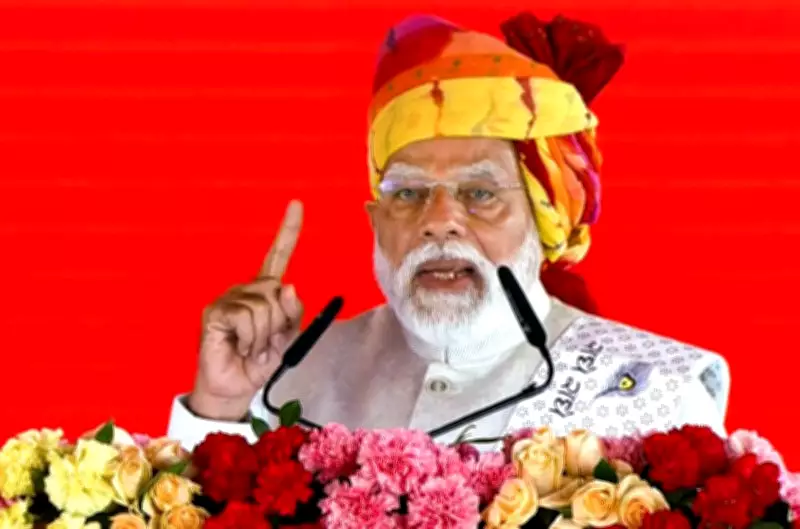
PM Modi Launches Scathing Attack on Congress Party
Prime Minister Narendra Modi has delivered a sharp critique of the Congress party, accusing it of undergoing a radical transformation in its political character. In a recent statement, Modi asserted that the Congress has effectively become a "Muslim League" and a "Maoist Congress," highlighting what he perceives as a shift in the party's core ideology and governance strategies.
Allegations of Ideological Shift
Modi's comments suggest that the Congress is aligning itself with divisive and extremist elements, drawing parallels to historical and contemporary political movements. By labeling it as the Muslim League, he implies a focus on communal politics, while the term Maoist Congress points to alleged left-wing extremism. This criticism comes amid ongoing political debates and electoral preparations, where such rhetoric often intensifies.
Context and Political Implications
The Prime Minister's remarks are seen as part of a broader narrative to challenge the Congress's credibility and appeal to voters. Modi emphasized that this transformation undermines the party's original principles and poses a threat to national unity. He argued that the Congress's current stance deviates from its founding values, potentially alienating its traditional support base.

Political analysts note that such statements are strategic, aimed at consolidating Modi's own voter base and highlighting contrasts between his government's policies and those of the opposition. The Congress has yet to issue a detailed response, but initial reactions from party members dismiss the allegations as baseless and politically motivated.
Historical and Contemporary References
Modi's reference to the Muslim League evokes memories of pre-independence politics, where the league advocated for a separate Muslim state, leading to the partition of India. By linking Congress to this, Modi suggests a similar communal approach. The Maoist Congress label alludes to leftist insurgencies in India, implying that the party supports radical ideologies.
This attack adds to the ongoing political discourse, with Modi positioning himself as a defender of national integrity against what he describes as divisive forces. The Congress, on the other hand, maintains that it remains committed to secularism and inclusive governance, rejecting Modi's characterizations as inflammatory.
As the political landscape heats up, such exchanges are expected to continue, shaping public opinion and electoral dynamics. Modi's comments reflect a persistent effort to frame the Congress as out of touch with mainstream Indian values, a tactic that could influence upcoming political battles.






