

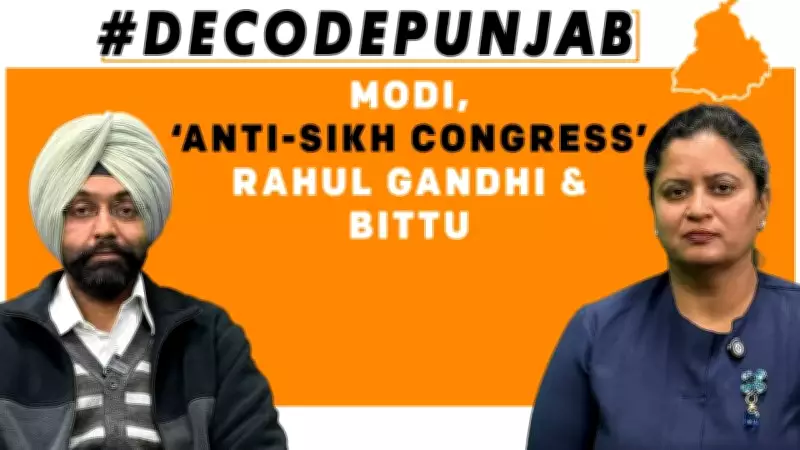
Political Firestorm Erupts as Modi and Gandhi Exchange Heated Accusations
In a dramatic escalation of political rhetoric, Prime Minister Narendra Modi has launched a scathing attack on the Congress party, accusing it of harboring an anti-Sikh stance. This accusation comes amidst a broader political confrontation that has seen Rahul Gandhi, a senior Congress leader, label Member of Parliament Ravneet Singh Bittu as a "traitor friend." The exchange highlights deep-seated tensions between the ruling Bharatiya Janata Party (BJP) and the opposition Congress, with historical grievances and contemporary politics colliding.
Modi's Allegations Against Congress
Prime Minister Modi, in his remarks, pointed to historical events to bolster his claim that the Congress party has systematically worked against Sikh interests. He referenced past incidents, suggesting a pattern of neglect and hostility towards the Sikh community under Congress rule. Modi emphasized that such actions have left a lasting impact, contributing to ongoing distrust. His statements are seen as an attempt to sway public opinion, particularly in regions with significant Sikh populations, ahead of upcoming political battles.
Rahul Gandhi's 'Traitor Friend' Remark
On the other side, Rahul Gandhi's comment targeting Ravneet Singh Bittu has added fuel to the fire. Bittu, a Congress MP, has been at the center of internal party dynamics, and Gandhi's label of "traitor friend" implies a betrayal of trust or ideological alignment. This remark is interpreted as a response to perceived disloyalty or political maneuvering within the Congress ranks. It underscores the internal challenges facing the party as it seeks to regroup and present a united front against the BJP.

Historical Context and Political Implications
The accusations from both sides are rooted in complex historical narratives. The anti-Sikh sentiment attributed to Congress dates back to events like the 1984 anti-Sikh riots, which have long been a point of contention. Modi's invocation of this history aims to remind voters of past Congress actions, while Gandhi's retort focuses on current allegiances and party discipline. This clash not only affects voter perceptions but also influences coalition politics, especially in states like Punjab where Sikh voters play a crucial role.
Reactions and Broader Impact
The political fallout from these exchanges is significant. Key reactions include:
- Public Discourse: The debate has sparked widespread discussion on social media and news platforms, with supporters and critics weighing in on the validity of the accusations.
- Party Dynamics: Within Congress, Gandhi's remark may lead to further introspection or factionalism, while Modi's attack could galvanize BJP supporters.
- Electoral Strategy: Both parties are likely using this controversy to shape their campaigns, targeting specific demographics and issues ahead of elections.
As the political landscape heats up, these accusations and counter-accusations are expected to dominate headlines, influencing public opinion and strategic moves in the coming months. The focus on Sikh-related issues and internal loyalty highlights the high stakes in Indian politics today.






