

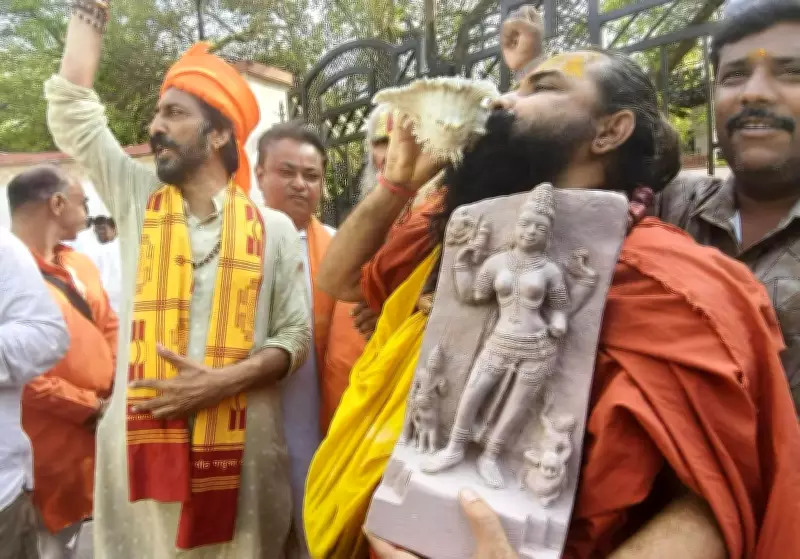
The Indore bench of the Madhya Pradesh High Court on Friday delivered a landmark verdict, ruling that the religious character of the disputed Bhojshala and Kamal Maula Mosque complex in Dhar is that of a "centre of Sanskrit learning and Hindu temple dedicated to goddess Vagdevi/Saraswati." The court granted exclusive daily worship rights to the Hindu community, bringing the long-contested matter to a decisive close.
Court Strikes Down 2003 ASI Order
The bench, comprising Justice Vijay Kumar Shukla and Justice Alok Awasthi, struck down a 2003 Archaeological Survey of India (ASI) order that had restricted Hindu worship at the 11th-century site to Tuesdays while permitting Muslim prayers on Fridays. The court directed the Union government and the ASI to take over the administration and management of the site as a Bhojshala temple and centre of Sanskrit learning. The Muslim community has been offered a separate, permanent piece of land elsewhere in Dhar district for the construction of a mosque.
Court's Findings and Historical Evidence
In its 242-page order, the court held that the disputed area is Bhojshala with a temple of goddess Vagdevi Saraswati. The judgment came after 21 days of arguments from petitioners, interveners, and respondents. On March 28, the judges visited the monument to take a firsthand view. The court also called upon the Centre to consider representations for the return of the idol of goddess Saraswati currently housed at the London Museum and its re-establishment within the Bhojshala complex.

The court grounded its findings in archaeological evidence, historical literature, and survey reports examined under the Ancient Monuments and Archaeological Sites and Remains Act, 1958. Drawing on principles from the Ayodhya case, the court held that archaeology draws on multidisciplinary approaches, and interpreting evidence requires accumulated wisdom and considered judgment. The bench noted the continuity of Hindu worship at the site, though regulated over time, which has never been extinguished.
Constitutional Obligations
On the constitutional dimension, the court held that every government carries an obligation to ensure the preservation and protection of ancient monuments, including temples, and the sanctum sanctorum and deities. This obligation extends to sanctioning funds for basic amenities to pilgrims, arrangements for shelter, maintenance of law and order, and preservation of the purity and character of the deity, backed by fundamental rights under Articles 25 and 26 of the Constitution.
Specific Directions
The court declared the disputed area a protected monument under the 1958 Act with effect from 18th March 1904. The ASI is to retain full supervisory control over preservation, conservation, and regulation of religious access, and continue overall administration and management under the Act. The court noted that the case was argued with dignity and restraint, reflecting the finest traditions of the legal profession.






