

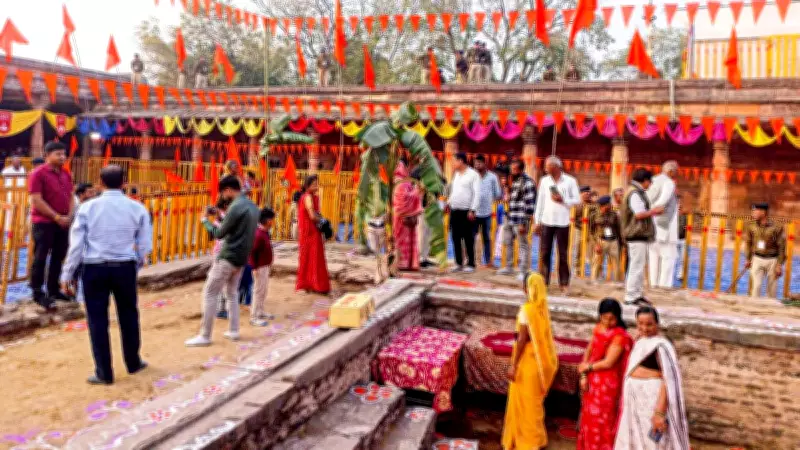
The Madhya Pradesh High Court delivered a landmark verdict on the Bhojshala dispute, drawing parallels with the Ayodhya case and relying heavily on a 2000-page Archaeological Survey of India (ASI) report. The ruling, which allows Hindus to offer prayers at the site, has significant implications for religious and historical claims.
Key Takeaways from the Verdict
Ayodhya Precedent
The court invoked the Supreme Court's 2019 Ayodhya judgment, emphasizing that historical and archaeological evidence can be used to determine religious ownership. It noted that similar to the Ram Janmabhoomi-Babri Masjid case, the Bhojshala site bears evidence of a pre-existing Hindu structure.
ASI Report Highlights
The ASI report, spanning over 2000 pages, was central to the verdict. It documented architectural features, inscriptions, and artifacts indicating that the site was originally a temple dedicated to Goddess Saraswati. The court accepted these findings as credible and scientifically established.

Religious Rights and Access
The court ruled that Hindus have the right to worship at the Bhojshala, but it also directed that the Muslim community's current usage should not be disrupted. A committee will be formed to regulate the timing and manner of prayers for both communities.
Background of the Dispute
The Bhojshala complex in Dhar district has been a contentious site, with Hindus claiming it as a temple of Goddess Saraswati and Muslims asserting it as a mosque named Kamal Maula. The ASI had conducted excavations in 2003, leading to the report that now forms the basis of the High Court's decision.
Reactions and Next Steps
The verdict has been welcomed by Hindu groups, while Muslim representatives have expressed disappointment and may approach the Supreme Court. The state government has been asked to implement the court's order and ensure peace and harmony.






