No Kings Protests Sweep US and Europe, Sparking Viral Interviews with Bizarre Claims
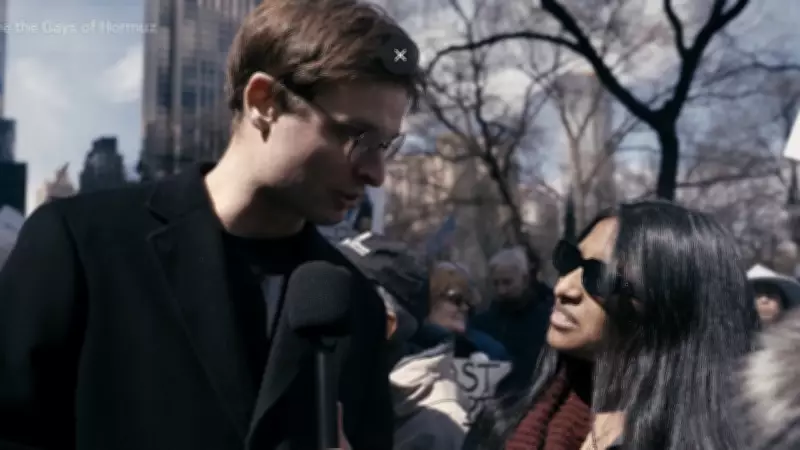
The "No Kings" protests erupted across the United States and parts of Western Europe on March 29, 2026, drawing thousands of participants opposed to President Trump's foreign policy, particularly the escalating tensions with Iran over the Strait of Hormuz. Organizers framed the movement as a stand for democracy, peace, and civil rights, but street interviews conducted by Lionel, known online as No Cap On God, revealed a startling lack of factual awareness among some protesters.
Fictional 'Gays of Hormuz' Ignite Sincere but Misguided Activism
Lionel's interviews began with an absurd premise: he asked protesters if it was homophobic to focus on the Strait of Hormuz rather than the "Gays of Hormuz." One protester immediately agreed, launching into a thoughtful explanation about historical discrimination against gay people, even in war. However, the Gays of Hormuz do not exist; the Strait of Hormuz is a critical waterway for global oil supply, central to US-Iran tensions. The protester called for government reform and education to address this fictional crisis, displaying unwavering conviction.
Another self-described straight ally pledged support, declaring it morally wrong to protect the Strait but not the Gays of Hormuz. A spontaneous chant of "Free the Gays of Hormuz!" emerged, with participants not questioning the location or reality of this group. The ally even suggested the area could become a gay-friendly destination like Fire Island, showcasing a blend of optimism and ignorance in foreign policy discussions.

Misconceptions About Iran as a Feminist and LGBT-Friendly Paradise
When asked about US-Iran relations, one protester claimed America hates Iran because it is "so feminist," with a companion asserting Iran is better for women than the US. In reality, Iran ranks among the most restrictive nations for women's rights, with ongoing protests like the "Woman, Life, Freedom" movement demanding basic freedoms. Protesters appeared unaware of these facts, highlighting a deep disconnect.
Further, a protester stated that Ayatollah Khamenei is "very pro-LGBT" and suggested the next Supreme Leader could be gay. Contextually, homosexuality is illegal in Iran and punishable by death, with executions for same-sex relations recorded. No one fact-checked these claims during the interviews, allowing misinformation to spread unchallenged.
Contradictory Calls for Nonviolence and Guillotine Executions
In a particularly striking segment, a protester detailed plans for guillotine executions of political opponents like Donald Trump and Stephen Miller, specifying blade dullness to prolong suffering. Yet, when directly asked, he confirmed a belief in nonviolence, holding mutually exclusive positions without apparent irony. This cognitive flexibility underscored the confusion prevalent among some activists.
Admiration for Authoritarian Regimes Amidst Free Speech Protests
Protesters expressed admiration for systems in China, Cuba, and Venezuela, praising healthcare and education benefits while overlooking authoritarian practices. One protester, a lesbian who wouldn't date a capitalist, argued America isn't democratic due to activist arrests. Another, holding a corporate job and paying high prices for salads, advocated for government-provided meals, blending radical economic ideas with personal lifestyle choices.
Ironically, Venezuelan demonstrators protesting against Maduro's regime were present, labeled as "traitors" by other protesters who admired that government. This contradiction went unremarked, highlighting the protest's ideological inconsistencies.
Analysis: Passion Over Knowledge in Modern Activism
These interviews, shared widely by figures like Ted Cruz and Brit Hume, reveal a broader issue: protesters often feel strongly about causes but lack factual knowledge. From mislocating the Strait of Hormuz to believing in Iran's progressive policies, confident wrongness became a shareable spectacle. Lionel's interview style, devoid of correction or editorializing, allowed subjects to reveal their beliefs unfiltered, making the footage both comedic and insightful.

The Strait of Hormuz remains a real geopolitical flashpoint with serious implications for global stability and human rights, including for LGBT individuals in Iran. Meanwhile, the fictional Gays of Hormuz symbolize how misinformation can fuel activism, underscoring the need for informed discourse in political movements.