

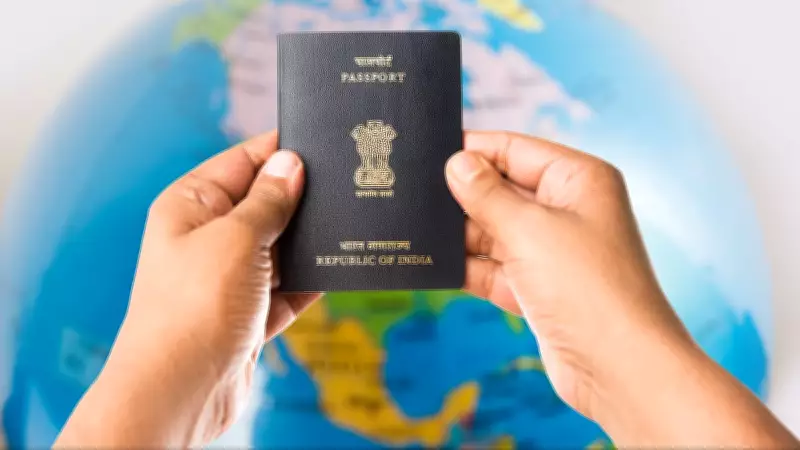
Passport Does Not Prove Citizenship: MEA Clarifies Legal Reality
The Ministry of External Affairs (MEA) recently stated that an Indian passport does not serve as definitive proof of Indian citizenship. This clarification has sparked widespread debate about what documents actually establish nationality in India. According to the MEA, India does not issue a single 'national citizenship card', and the legal framework relies on a combination of documents to determine citizenship status.
The statement highlights a complex legal reality rooted in the Citizenship Act, 1955, and subsequent amendments. While a passport is a travel document issued to citizens, it is not conclusive evidence of citizenship. Similarly, Aadhaar cards and voter ID cards are often used as identity proofs but do not legally confirm citizenship.
What Actually Proves Indian Citizenship?
Under Indian law, citizenship is primarily determined by birth, descent, or registration. The Citizenship Act specifies that individuals born in India on or after January 26, 1950, but before July 1, 1987, are citizens by birth. For those born after July 1, 1987, at least one parent must be an Indian citizen at the time of birth. For births after December 3, 2004, both parents must be Indian citizens, or one parent must be a citizen and the other not an illegal migrant.

Documents that can serve as proof of citizenship include a birth certificate, a certificate of naturalization, or a citizenship certificate issued under the Citizenship Act. The MEA emphasized that lineage documents, such as parents' citizenship proofs, are critical in establishing one's status. In many cases, a combination of documents is required to prove citizenship beyond doubt.
Why Passport and Aadhaar Are Not Enough
The MEA's statement underscores that a passport is merely a travel document, and its issuance is based on the applicant's declared citizenship, which is verified through supporting documents. However, if there is a discrepancy in the underlying documents, the passport may not hold up as proof. Similarly, Aadhaar is a biometric identity number issued by the Unique Identification Authority of India (UIDAI) and is not a citizenship document. It can be issued to residents, including non-citizens who have lived in India for a specified period.
Voter ID cards, issued by the Election Commission, are also not conclusive proof of citizenship. They are based on electoral rolls, which include citizens aged 18 and above, but errors or outdated information can occur. The MEA's clarification aims to prevent misuse of these documents and ensure that citizenship claims are verified through proper legal channels.
Impact on Citizens and Government Processes
The lack of a single citizenship card can create challenges for citizens when accessing government services, traveling, or proving identity. The MEA's statement is particularly relevant in the context of the National Register of Citizens (NRC) and the Citizenship Amendment Act (CAA), which have raised questions about documentation. The government has clarified that the NRC process requires specific documents to prove citizenship, and the MEA's statement reinforces the need for accurate lineage-based proof.
According to legal experts, the onus is on individuals to maintain proper records of birth, parentage, and citizenship. The MEA has advised citizens to ensure that their documents are consistent and up-to-date to avoid legal complications. The statement also serves as a reminder that citizenship is a legal status determined by law, not by possession of any single card.






