

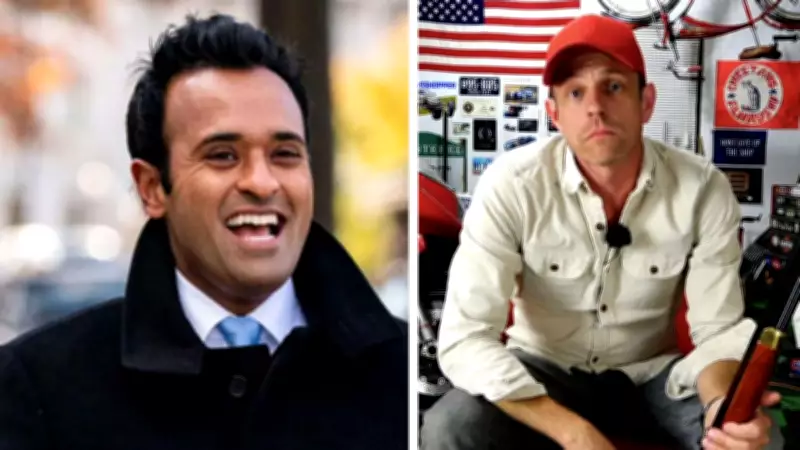
Ohio Republican Candidate's Social Media Remarks Ignite Political Controversy
Republican gubernatorial candidate Casey Putsch has generated significant controversy across social media platforms following a provocative reply directed at fellow Republican contender Vivek Ramaswamy. The exchange centered on questions of American identity and cultural belonging within the context of Ohio's political landscape.
The Social Media Exchange That Sparked Debate
The controversy began when Vivek Ramaswamy, who is actively campaigning for the Ohio governorship in the 2026 Republican primary, posted on platform X about his recent engagement with Ohio conservationists and hunters. In his original post, Ramaswamy emphasized the importance of sustainable wildlife conservation alongside hunting rights, framing these issues as crucial elements in protecting both freedoms and the environment within Ohio.
Casey Putsch responded directly to Ramaswamy's post with language that immediately drew attention and criticism. Putsch's reply stated: "Says a Hindu anchor baby who doesn't-Hunt, Shoot, Eat meat, or Have firearm knowledge Vote Putsch, Real American." This response has been widely interpreted as questioning Ramaswamy's authenticity as an American based on religious and cultural factors.

Background of the Candidates Involved
Casey Putsch operates as a business owner and automotive entrepreneur based in Perrysburg, Ohio. He established the charitable organization Genius Garage and has positioned himself as an "America First" alternative to Ramaswamy within the Republican primary contest. Putsch's campaign platform emphasizes several key issues including:
- Stronger immigration restrictions and controls
- Prioritization of job opportunities for domestic workers
- Criticism of H-1B work visa programs
- Advocacy for what he terms "working Americans"
Vivek Ramaswamy represents a different approach within the Republican field. As a billionaire entrepreneur who has received backing from former President Donald Trump, Ramaswamy campaigns on mainstream Republican and national conservative positions. His outreach efforts have included engagement with voters on diverse issues ranging from environmental conservation to Second Amendment rights, as demonstrated in his original post about hunting and wildlife protection.
The Broader Political Context in Ohio
The Ohio governor's race has attracted considerable national attention, with multiple candidates presenting competing visions for both the Republican Party and the state's future direction. Ramaswamy's substantial fundraising capabilities and endorsement network have established him as a prominent contender within the Republican field. Meanwhile, Putsch's messaging appears designed to appeal specifically to conservative voters who favor more restrictive immigration policies and cultural traditionalism.
Beyond the Republican primary contest, Democratic candidate Amy Acton presents another option for Ohio voters. As the former Ohio health director, Acton has secured endorsements from major labor unions and is viewed as a strong potential challenger to Republican candidates in the November 2026 general election.
Implications and Reactions
The exchange between Putsch and Ramaswamy highlights ongoing debates within the Republican Party regarding:
- The definition of American identity in political discourse
- The role of cultural and religious factors in political qualifications
- Diverging approaches to immigration policy within conservative circles
- The balance between traditional values and broader electoral appeal
Political analysts suggest that such exchanges may influence voter perceptions as the 2026 election approaches, particularly among Republican primary voters who must choose between candidates representing different visions of conservatism. The controversy also raises questions about how cultural identity and authenticity will factor into political campaigns moving forward.

As the Ohio governor's race continues to develop, observers anticipate further discussion about the appropriate boundaries of political discourse and the substantive policy differences between candidates. The Putsch-Ramaswamy exchange represents just one facet of what promises to be a complex and closely watched political contest with implications extending beyond Ohio's borders.





