

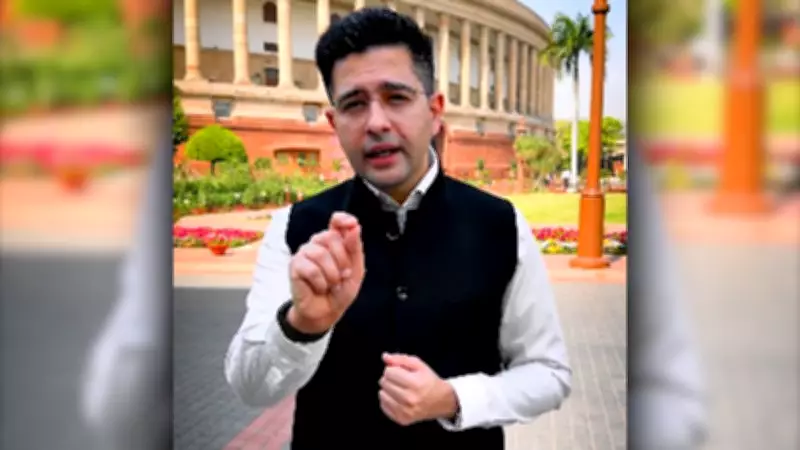
Raghav Chadha Defends AAP's Parliamentary Conduct Amid Criticism
In a recent statement that has sparked significant political discourse, Aam Aadmi Party (AAP) Member of Parliament Raghav Chadha has robustly defended his party's actions in Parliament, posing a pointed question: "Is it a crime to raise people's issues in Parliament?" This rhetorical challenge comes in response to mounting criticism from political opponents who have accused AAP of disrupting parliamentary proceedings and focusing excessively on local Delhi matters at the national level.
Chadha's Firm Stance on Democratic Representation
Raghav Chadha, a prominent figure within AAP and an MP representing Delhi, emphasized that the primary duty of elected representatives is to voice the concerns and grievances of their constituents. He argued that Parliament serves as the highest forum for such democratic expression, and raising issues affecting common citizens—such as healthcare, education, and infrastructure—should be celebrated, not condemned. "Our mandate is to speak for the people who elected us," Chadha stated, underscoring that AAP's parliamentary interventions are driven by a commitment to public welfare rather than political theatrics.
Context of the Political Debate in Delhi
The controversy arises against the backdrop of ongoing tensions between AAP, which governs Delhi, and the central government led by the Bharatiya Janata Party (BJP). Critics have alleged that AAP MPs, including Chadha, often prioritize Delhi-specific issues in Parliament, potentially overshadowing broader national agendas. However, Chadha countered this by highlighting that many of these local issues, such as air pollution and water supply, have national implications and deserve attention at the federal level. He pointed out that raising these matters aligns with the constitutional role of MPs to hold the government accountable and ensure equitable development across regions.

Broader Implications for Parliamentary Democracy
This debate touches on fundamental aspects of India's parliamentary democracy, including the balance between local and national representation. Chadha's remarks have ignited discussions among political analysts and citizens alike about the responsibilities of MPs. Some view his stance as a necessary defense of grassroots democracy, while others see it as a strategic move to bolster AAP's image ahead of upcoming elections. Regardless, the incident underscores the increasingly polarized nature of Indian politics, where even routine parliamentary activities can become flashpoints for partisan conflict.
Public and Political Reactions
Reactions to Chadha's statement have been mixed. Supporters of AAP have applauded his boldness, arguing that it reinforces the party's pro-people ethos. In contrast, opponents have dismissed it as political posturing, accusing AAP of using Parliament as a platform for publicity rather than substantive legislation. This divergence in opinions reflects the deep-seated political divisions in Delhi, where AAP and BJP are locked in a continuous struggle for dominance. As the debate unfolds, it remains to be seen how this will impact AAP's parliamentary strategy and its broader political fortunes in the capital and beyond.






