

Congress Leaders Accuse PM Modi of Strategic Surrender Over Iran Warship Incident
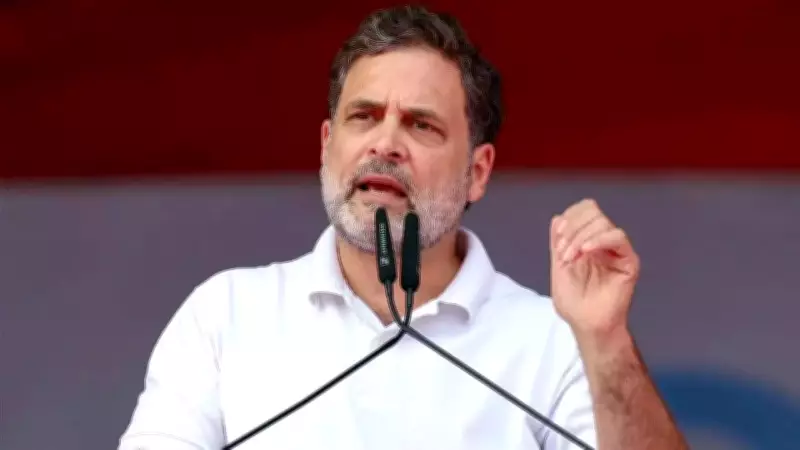
Congress MP Rahul Gandhi has launched a sharp critique against Prime Minister Narendra Modi, stating that his silence following the sinking of an Iranian warship in the Indian Ocean demonstrates a complete surrender of India's strategic sovereignty. The opposition party has further condemned the government for what it describes as the dismantling of foreign policy foundations carefully established over seven decades.
Volatile Global Phase and Threats to Indian Interests
Rahul Gandhi emphasized that the world is currently navigating a highly volatile period, with turbulent waters ahead that directly threaten India's economic and security interests. He highlighted that approximately 40% of India's imports, including crucial oil supplies, transit through the Strait of Hormuz, which is now under significant threat due to escalating regional conflicts.
"The conflict has now reached our very backyard, with an Iranian warship being sunk in the Indian Ocean," Gandhi stated. "Yet, the Prime Minister has maintained complete silence. At such a critical juncture, our nation requires steady leadership. Instead, we have a compromised Prime Minister who has surrendered our strategic autonomy."

Kharge Questions Government's Response and Maritime Safety
Congress President Mallikarjun Kharge echoed these concerns, describing the Modi government's silence after the sinking of the Iranian ship—which was reportedly a guest of the Indian Navy—as a reckless abandonment of India's strategic and national interests. Kharge raised serious questions about the apparent absence of maritime rescue and relief operations for 38 Indian-flagged commercial vessels and approximately 1,100 sailors currently stranded in the conflict-affected region.
Kharge further criticized the government for failing to disclose any concrete plan to address rising oil prices and limited reserves, particularly following agreements with the United States to halt imports from Russia. He pointed out that around one crore Indians reside in Gulf region countries, with many, including medical students, sending desperate messages seeking assistance.
"Clearly, Modi's surrender is both political and moral," Kharge asserted. "It undermines India's core national interests and dismantles the foreign policy framework meticulously developed and upheld by successive governments over many years."
Broader Implications for Indian Foreign Policy
The Congress party's accusations extend beyond immediate crisis management to broader foreign policy concerns. Leaders argue that the current administration's approach represents a significant departure from established diplomatic practices, potentially jeopardizing long-term strategic partnerships and regional stability.
As tensions continue to simmer in the Indian Ocean region, with reports of a second Iranian warship heading toward Sri Lanka following the submarine attack, the opposition's calls for transparency and proactive leadership grow louder. The situation underscores the complex challenges facing Indian foreign policy in an increasingly unstable global environment.






