

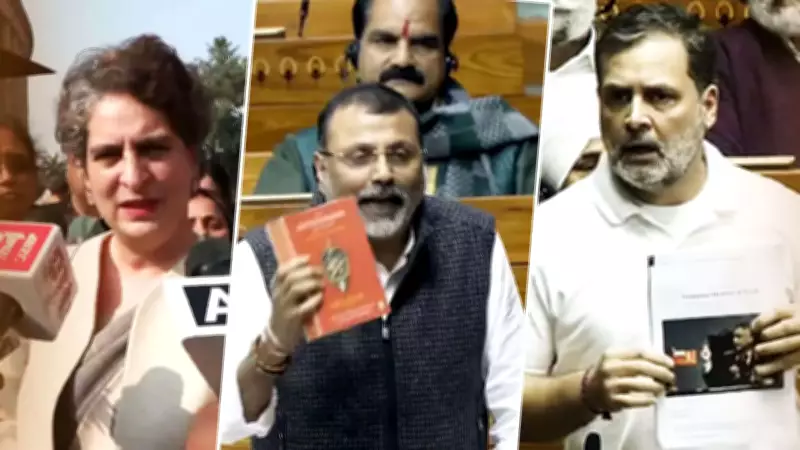
A fierce political confrontation erupted in the Lok Sabha on Tuesday, February 4, 2026, creating a storm of controversy over the selective application of parliamentary rules regarding the citation of published materials. The dramatic session saw Congress leader Rahul Gandhi defending his right to quote from former Army Chief General M.M. Naravane's memoir concerning the Galwan Valley standoff, while BJP MP Nishikant Dubey referenced books targeting Jawaharlal Nehru and Indira Gandhi.
Contrasting Treatment of Book Quotes Sparks Outrage
The Congress party has vehemently accused the ruling BJP government of enforcing a double standard within Parliament's hallowed halls. According to Congress representatives, there appears to be one set of rules for government allies and an entirely different, more restrictive set for opposition members. This allegation gained significant traction when Rahul Gandhi was reportedly barred from reading excerpts from General Naravane's published memoir during the parliamentary proceedings.
Congress Leaders March to Speaker's Office
The confrontation escalated dramatically when Congress MPs organized a march to the office of Speaker Om Birla, demanding equal treatment and transparency. During this tense procession, heated exchanges occurred between Congress members and BJP leaders, including Union Minister Kiren Rijiju. The scene highlighted the deepening political divisions and the raw emotions surrounding this parliamentary controversy.

Priyanka Gandhi's Sharp Critique
Congress General Secretary Priyanka Gandhi Vadra launched a pointed attack on the government's handling of the situation. She asserted that the administration was deliberately attempting to shut down meaningful debate on critical national security matters. According to Priyanka Gandhi, Dubey's remarks about historical figures were strategically unleashed to distract public attention from the explosive claims contained within General Naravane's memoir regarding leadership decisions during the China border crisis.
Rahul Gandhi's Defense of Military Truths
Rahul Gandhi stood firm in his defense of the former Army Chief's published account. He emphasized that General Naravane's memoir represents a genuine, officially published document that contains vital insights for every Indian citizen. Specifically, Gandhi highlighted passages where the Army Chief described feeling isolated and unsupported as Chinese forces advanced during the Galwan Valley confrontation. These revelations, according to Gandhi, deserve serious parliamentary discussion rather than suppression.
Broader Implications for Parliamentary Democracy
This explosive episode has ignited a much wider debate extending beyond immediate political skirmishes. Serious questions are now being raised about censorship practices within India's highest legislative body, the acceptable limits of dissent in parliamentary proceedings, and whether uncomfortable military truths are being deliberately buried beneath layers of political noise. The controversy touches upon fundamental democratic principles regarding transparency, accountability, and the right to access published information about matters of national security.
The timing of this confrontation is particularly significant, occurring against the backdrop of ongoing border tensions and complex geopolitical relationships. As political parties dig in their positions, the episode raises concerns about whether Parliament can effectively fulfill its role as a forum for examining difficult truths when such partisan divisions dominate the proceedings.






