

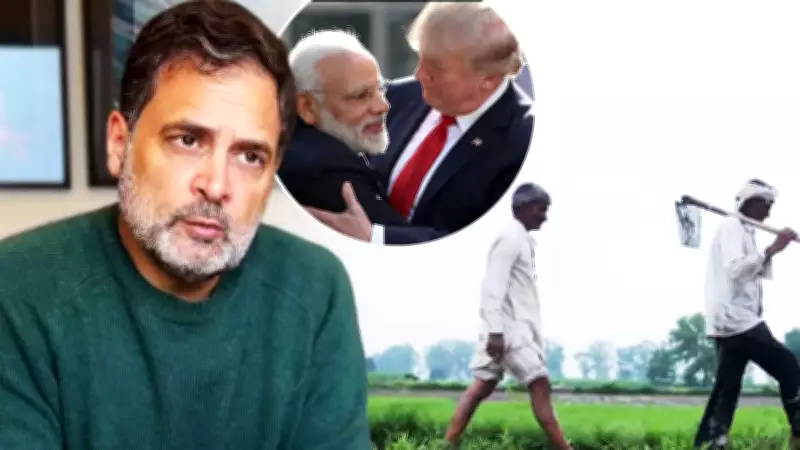
Rahul Gandhi Launches Fierce Attack on Modi Government Over US Trade Agreement
Leader of Opposition in the Lok Sabha, Rahul Gandhi, has escalated his political offensive against Prime Minister Narendra Modi, delivering a sharp critique of the government's recent trade negotiations with the United States. In a strongly worded video message, Gandhi accused the administration of undermining India's agricultural sector and compromising national food security through concessions made to foreign interests.
Allegations of Agricultural Market Compromise
Rahul Gandhi specifically targeted what he described as the opening of India's agricultural markets to external forces, highlighting potential negative impacts on multiple crop sectors. The Congress leader pointed to cotton, maize, soybean, apple, and various fruit growers as particularly vulnerable groups who he claims will bear the brunt of these policy decisions.
"The government has chosen to prioritize large corporate entities and foreign interests over the welfare of our small farmers," Gandhi asserted in his message. He emphasized that these agricultural producers would be left without adequate minimum support price (MSP) protections or access to necessary mechanization resources under the current framework.

Political Standoff and Parliamentary Challenge
Characterizing the trade agreement as fundamentally "anti-farmer" in nature, Gandhi declared that the Congress party would mount vigorous opposition to its implementation. The opposition leader went further by directly challenging the government to pursue legal or parliamentary action against him, demonstrating his willingness to confront potential consequences.
"I will not retreat from standing with our farmers and exposing the truth in Parliament," Gandhi vowed, positioning himself as a defender of agricultural interests against what he portrayed as government policies favoring external economic forces.
Broader Political Context
This confrontation occurs within a complex geopolitical landscape marked by evolving trade relationships between India and the United States. The criticism from the opposition leader reflects ongoing debates about economic sovereignty, agricultural protectionism, and the balancing of international trade commitments with domestic producer interests.
The political exchange highlights deepening divisions over economic policy direction, with agricultural welfare emerging as a central battleground between the ruling administration and opposition forces ahead of crucial parliamentary sessions.






