

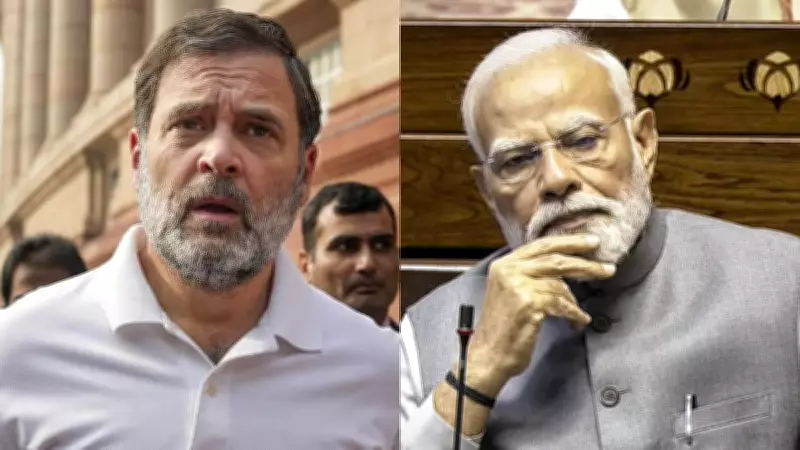
Rahul Gandhi Challenges Modi Government Over US Trade Deal and Leadership
Congress leader Rahul Gandhi has launched a sharp critique of the Narendra Modi-led government, focusing on a recent trade agreement with the United States and raising questions about the Prime Minister's governance style. In a public address, Gandhi positioned himself as a champion for India's farmers and workers, alleging that the current administration's policies are detrimental to their interests.
Allegations of Harmful US Trade Agreement
Rahul Gandhi strongly condemned the terms of the US-India trade deal, claiming it disproportionately favors American corporate interests at the expense of Indian agricultural and labor sectors. He argued that the agreement could lead to increased market competition that small-scale farmers and local industries are ill-equipped to handle, potentially threatening livelihoods and economic stability.
"The government has signed a deal that sells out our farmers and workers," Gandhi stated, emphasizing that the pact lacks adequate safeguards for domestic producers. He highlighted concerns about import tariffs, intellectual property rights, and market access provisions that he believes could undermine India's self-reliance and food security.

Questioning Prime Minister Modi's Leadership and Responsiveness
In a pointed rhetorical move, Gandhi questioned whether Prime Minister Narendra Modi is truly listening to the concerns of ordinary citizens or if his grip on power has become too strong to allow for meaningful dialogue. This critique touches on broader themes of democratic accountability and centralized decision-making within the current political framework.
Gandhi suggested that the government's approach reflects a top-down style that marginalizes stakeholder input, particularly from vulnerable groups like farmers and laborers. He called for greater transparency and consultation in policy formulation, especially regarding international agreements that have far-reaching domestic consequences.
Positioning as Advocate for Marginalized Groups
The Congress leader explicitly framed his remarks as a defense of workers and farmers, groups that have been at the center of recent political and social movements in India. He accused the government of neglecting their welfare in pursuit of geopolitical and economic objectives.
- Farmers' Concerns: Gandhi warned that the trade deal could flood Indian markets with subsidized American agricultural products, depressing prices and hurting local farmers' incomes.
- Workers' Rights: He expressed apprehension that the agreement might compromise labor standards and job security, particularly in manufacturing and service sectors.
- Call to Action: The opposition leader urged the government to renegotiate the deal or implement robust support mechanisms to protect domestic interests.
Political Context and Implications
This criticism comes amid ongoing political tensions and debates over India's economic direction and foreign policy. Gandhi's statements are likely intended to galvanize opposition support and highlight perceived failures of the ruling party. The focus on farmers and workers taps into key voter bases and reflects longstanding Congress party themes of social justice and inclusive growth.
Analysts note that such rhetoric could influence public discourse ahead of upcoming elections, shaping narratives around governance, economic sovereignty, and leadership accountability. The government has yet to issue a detailed response, but previous administrations have defended trade agreements as beneficial for long-term economic growth and strategic partnerships.
As the debate unfolds, the central questions raised by Rahul Gandhi—about who benefits from international deals and how much voice ordinary citizens have in policymaking—are set to remain contentious issues in India's political landscape.






